
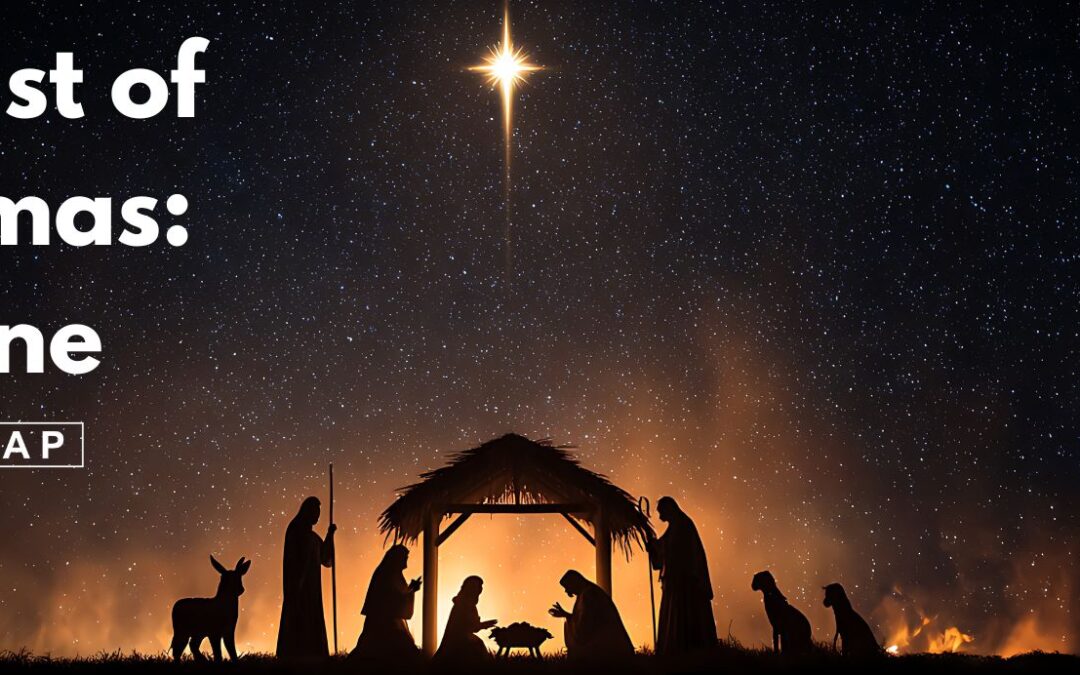

The Cast of Christmas: Part 1
December 16, 2025
Host: Dr. Jamie Mitchell
Guests: Isaac Crockett, Mark Crocco, Dave Christensen
Note: This transcript is taken from a Stand in the Gap Today program aired on 12/16/25. To listen to the podcast, click HERE.
Disclaimer: While reasonable efforts have been made to provide an accurate transcription, the following is a representation of a mechanical transcription and as such, may not be a word for word transcript. Please listen to the audio version for any questions concerning the following dialogue.
Jamie Mitchell:
Welcome friends to a special edition of Stand In the Gap Today. I’m Jamie Mitchell. I’ll be your host today. And our theme this year for our special program is The Cast of Christmas. And with the help of our fellow hosts and some former guests of our program, we want to look at the different people who make up the Christmas story and their relevance, their importance to our lives, and to kick things off our very own Isaac Crockett. Isaac, welcome this morning. I’m really glad to have you a part of this Merry Christmas and thanks being a part of this special look at the people of Christmas. And I gave you one of my favorite characters, the character of Joseph, the earthly father of Jesus. Isaac. Tell us a little bit about Joseph and what was so special about him.
Isaac Crockett:
Well, thank you very much Jamie and a Merry Christmas to you as well. Joseph is a very special character, really neat character, and yet in the Christmas cast, he’s one without a lot of lines. In fact, he has no lines in the program and yet without him, this story really wouldn’t be there. And so he’s such a neat guy. You and I were talking about him just even recently that he shows biblical masculinity. There’s all this fear and hoopla a few years ago about toxic masculinity, and here’s somebody who shows how to be a provider for God himself. Just such a creative thing, such an incredible opportunity put on him. And we were just reading the passage in Matthew chapter one last night in our family devotions. We were doing kind of an advent reading, and my son got to the verse where in verse 19 it says Joseph. And he said, being just a man. And I said, wait a minute, read that again. And he said, Joseph being a just man. And I said, that’s right. And that’s what he was. He was a just man, just like we have the Supreme Court justices. He was somebody who did right. He was a righteous man. We saw his lineage. He’s of David, but he is a just man and a godly man and a manly man, if that makes sense.
Jamie Mitchell:
It does Isaac, because when you think about it, when Mary who was betrothed to Joseph, comes to Joseph and says, I am with child, immediately you think to yourself, well, you’ve been unfaithful to me. And in many respects he could have treated Mary different. But I guess how he treated Mary really was a tremendous example of his righteous attitude, wasn’t it?
Isaac Crockett:
Oh yeah. I mean, he’s expected to do things that you wouldn’t expect. That’s the whole really, that’s so much of what makes it such a neat narrative, a neat account of God coming and becoming incarnate. You wouldn’t expect any of this except that prophecy foretold it. And so he’s told, go ahead and marry Maria, Maria and Josef. These invitations have been sent out, and then he finds out Maria’s expecting a child and how can I marry her now? No, go ahead and marry her. And later on he’s going to be told, go ahead and leave Israel for the protection of this child of yes, you, your son. That’s Mary’s son, but he believes the angel. And we’ll talk about that some maybe too, but his belief. But yeah, he has a lot put upon him and very likely he and Mary were very young. And so this is early in his life and this of course will change his life and all of our lives because of his being righteous and listening to what the angel said,
Jamie Mitchell:
Reputation and your honor was a big part of the culture in that day. And in many respects, Joseph could have thrown Mary under the bus, but he chose not to do that. Isaac Joseph had a heavy responsibility to care and provide and protect for the son of God. Isaac, what is that one quality? As we look at these cast, the cast of Christmas, what’s that one quality of Joseph that we today should take and embrace and make it part of our life? How do we live out and become Joseph today?
Isaac Crockett:
Well, in Matthew one, and then we see more of this in Luke chapter two. It’s interesting, as you just said, he wants to be, he’s just, he’s righteous and this goes against what he’s thinking, but he’s listening to this messenger from God. We see his actions and even his thoughts recorded, but we don’t have any words recorded from him, but he’s being told by this angel, all of this stuff is done in Matthew 1 22. This took place to fulfill what the Lord had spoken by the prophet. So I’m telling you the word of God here and you are being a part of this bigger picture. And he wakes from this, and instead of just shaking it off and saying, that was kind of crazy, he obeys it, he listens, he believes, he obeys. And this is what we see in a true biblical man. True biblical masculinity is self-sacrifice and obedience.
Ultimately, obedience requires self-sacrifice. It requires humility. And so it says that when Joseph woke from his sleep, he did as the angel of the Lord commanded him. And then we get into the narrative that Luke tells us in chapter two of Luke, and he tells us that Joseph and Mary, they bring Jesus Yeshua. Their son is brought in to be consecrated at the temple. Why? Why? Because that’s what the Bible requires. He’s obeying it. Then the Lord comes to him in a dream again and he says, guess what? You know, got to get out of here because Herod is coming after the baby. And so he takes off and he leaves Israel, he leaves family. I mean, every one of these times that he obeys, you’ve pointed this out already, Jamie, but he’s doing it at great sacrifice to his own plans, even to his own identity, because his identity is in Christ.
Our identity is in Christ the rest of his, in fact, throughout Jesus’ life, oh, that’s Yeshua of Nazareth. He’s the carpenter son. He’s Joseph’s son. Well, we know in this story that he’s not, but Joseph takes him and he becomes the father. He becomes that provider. He becomes that man in the life, and this is God the creator, putting on flesh, becoming a baby, obeying his parents, and we see Joseph taking them to the Passover feast and doing all that, the law, all that God’s word requires of them. And that is obedience, and that is what it means to be a real man, to be a biblical man, Jamie.
Jamie Mitchell:
Amen. Amen. You know Isaac, I know you have a couple of sons. I have one son, and I can remember the day when I got word that because we adopted Alex, I remember the day that I got word after anticipating waiting to hear this, that Alex was born, and in a few days we could go and we could get him and we could bring him into our family. And with all that anticipation, it was so exciting, and then it hit me like a ton of bricks. Oh man, I have the responsibility not just to be a husband to a wife, but I now have a responsibility to be a father to a son. And I remember how overwhelming that was, but friends, can you imagine when the angel told Joseph that he would be the earthly father of God himself? What an amazing fact. And so friends, thank you.
Thank you, my brother Isaac, we love you and thank you so much for getting us started. Friends, when we return another cast of Christmas and this time another parent Mary and what we can learn from her life, this is our special annual Stand in the Gap Christmas program. This is part one. Part two will be next week, but we’re looking at the different people who make up the Christmas story. Don’t go anywhere. Stay with us for this special Christmas edition. Well welcome back to our special Christmas edition. This is the first of a two-part program and we are considering what I’m calling the cast of Christmas. The dramatic people who make this story come alive. Isaac Crockett has shared about Joseph. It’s only right that we look at his betrothed wife, Mary, to help us, one of our returning guests, the Reverend Mark Crocco from the refer in project. Mark, I know you’ve preached a lot with Christmas over the years, and I bet Mary has been at the centerpiece of many of those sermons. Mark, what should our listeners know about Mary and what makes her a unique person to bring the Messiah into the world?
Mark Crocco:
Well, Jamie, to understand the uniqueness of Mary is to understand the magnitude of what God called her to do. God called Mary to become the human instrument and channel that God chose to give birth to the Messiah, the Lord Jesus Christ, who was the holy, perfect, and sinless son of God, the only savior of this world. It’s hard to comprehend the immensity and the enormity of her calling that she would become the mother of the one who would walk on this planet as God in human flesh. So what qualified Mary to be called to such a high exalted and privileged calling? The answer to this question must be the grace of God. She was a poor Jewish girl who grew up with common people, not the elite of society. In Luke 1 47, Mary’s response to the news that she would conceive a child through the Holy Spirit caused her to joyfully respond.
My spirit rejoices in God. My savior. Mary acknowledged that as the sinner, she needed a savior. She was in need of the grace of God in her own life. In addition, she recognized that being chosen as the human instrument through which Christ would be born was also an expression of God’s grace in her life. Jamie, on a more practical level, what made her a unique person to bring the Messiah into the world was her spirit of humility and servanthood. In spite of her initial fears and confusion about God’s plans for her life, she was willing to humbly submit to God’s will for her life, for his greater glory. Every Christmas, her life is a reminder to all of us what simple obedience looks like in our relationships with God.
Jamie Mitchell:
Mark, our friend, Phil Tuttle has said this about Mary. I think it’s really profound. He said, some adore her and others ignore her, but what we must do is to strive to restore her. And what he means by that is for us to fully see how God sees her and what she brings to the whole story of Christmas, not to almost like being another redeemer, but also not to marginalize her and say she’s no big deal. She is a big deal. And Mark, how do we bring the beauty of Mary back into balance and into proper perspective in the Christmas story?
Mark Crocco:
Yeah, and Jamie, those are great observations. There are some very practical lessons that we can learn from Mary this Christmas season. I think the first lesson we can learn from Mary this Christmas season is that God is calling us like Mary to a life of humility and servanthood. Her life is one of the most powerful examples of humility and servanthood that we will find anywhere in scripture. In Mark chapter 10 and verse 45, our Lord Jesus Christ clarifies why he came to this earth. He expressed for the son of man has come not to be served, but to serve and to give his life a ransom. For many, this is the true spirit of Christmas. From a biblical perspective like Mary, we must humbly submit our wills to God’s will in loving obedience with a desire to serve him and others. This Christmas season is a season to hear once again that God is calling us to a life of Christ-like humility and servanthood.
The call to Christ-like transformation to the glory of God has always been God’s timeless call to his people throughout the centuries. Every Christmas season we hear that call with fresh ears. The example of Mary’s submission to the will of God inspires us each year to respond to God’s call to live a Christ-like life each Christmas. But there’s a second lesson that is equally powerful, Jamie. We can also learn from Mary that this Christmas season is a time to rejoice in God and to celebrate the incarnation of Jesus Christ. Jamie, listen to the words of Mary in the famous magnifico. In Luke chapter one in verse 46, Mary said, my soul magnifies the Lord and my spirit rejoices in God my savior, despite the almost certain humiliation that would accompany her unwed pregnancy, she chose the magnify the Lord and to rejoice in God her savior Mary’s joy is a reminder to us that the Christmas season is the time to rejoice in the fact that our Lord Jesus Christ is God in human flesh, and that he came to the earth to be born as a man to provide salvation for the entire human race.
There is no greater message on this entire planet and certainly no message that is the source of greater joy in Thanksgiving. Jamie, there’s a third and final lesson that I’d like to share with you about Mary, which she teaches us. The third lesson that we can learn from Mary this Christmas season is that God can be trusted at all times, especially when life’s circumstances don’t make sense to us. When the angel Gabriel informed Mary that the Holy Spirit would come upon her and that she would bear a son, she simply respondent in faith, behold, I am a servant of the Lord. Let it be according to your word, despite all the uncertainties that could potentially enter her life, she trusted God’s guidance and divine plan demonstrating her willingness to trust God. There may be many who are listening to this broadcast who are facing major uncertainties in their own lives. Christmas 2025 is a reminder to all of us that nothing is impossible with God. He can be trusted at all times in all things. Mary’s role in the Christmas story is a profound illustration that God can be trusted even when our circumstances don’t seem to make sense to us.
Jamie Mitchell:
Amen? Amen. I’ll tell you what tremendous insights mark on the life of Mary. The only thing I can add is when I think about Mary, I think about a person and a woman specifically who many things were thrust upon her. She was asked to do many things, or really it kind of fell on her and she didn’t resist. She didn’t fight, she didn’t complain. She just embraced what God had given her. And Mark, we have about a minute or so left, but that is something that all of us can really learn from Mary, can’t we? That at times, God gives us things, drops things on us, lets us experience things, and our posture needs to be this is what God has for me, and if I’m going to follow him and trust him, I just need to embrace that. Isn’t that just a fantastic quality that Mary shows us?
Mark Crocco:
Yeah. Despite all of the uncertainties that surrounded her circumstances, she trusted God’s guidance and divine plan in so many ways. She demonstrates what faith and courage are all about something that we all need to embrace this Christmas season.
Jamie Mitchell:
And Mark, I know personally this past year, God has worked in your life. You’ve seen victory over cancer, and we walked through that whole experience together, but talk about facing something that you didn’t think you didn’t ask for, but God brings it in your life and you lean on him and you trust him much like Mary did and walk through that experience. Hey, thank you my friend for being with us. What a blessing to have you and you’d be a part of this Special Day. Friends, we all know the song Mary did, you know, but after listening to Mark share about Mary, the question I have for you today is, do you know Mary? Do you know the qualities of Mary’s life? Listen, we are just finishing up 2025. We’re going to be facing 2026 in just a few weeks. Just think of the things that may drop in your lap, like in the lap of Mary, and will you embrace them like Mary did?
And she brings a whole new dimension to the glorious story of Christmas. Well, next up, an associate of Marks, a matter of fact, the person he serves with Dr. Dave Christensen from the record in project is going to be with us, and we’re going to be talking about God’s special divine messengers as we continue in our special Christmas edition Stand in the Gap today. Well, thanks for allowing us to share with you this unique aspect of the different people who make up the Christmas story. But not all were people. Another cast member of Christmas were supernatural messengers of God, and I’m talking about the angels. And to shed light on these angelic beings is our friend and former guest, Dr. David Christensen. He’s from the refer Dim Project, the president who also Mark Crocco serves with. Dave, it’s so good to have you with us. When I was a kid, I always listened in awe at the description. Anytime angelic beings were mentioned and anytime they showed up in the scriptures, I was always interested. Can you tell us about angels and how did they play a role in the Christmas story?
Dave Christensen:
Well, thanks for having me on the program, Jamie. I’m excited to talk about the role that the angels played in the Christmas story. The French philosopher and writer Madeline L’engle wrote, I have a point of view. You have a point of view, but God has view. Now, the angels in the Christmas story give us God’s view because we see life sequentially and horizontally. God sees life universally and cosmically. We have a point of view. He has view in Bibles, in the Bible, storyline are interspersed with moments with angels. God uses angels to communicate god’s what is happening? So each time the angels pull back the curtain so we can see God’s view. An angel announced to Abraham and Sarah, the birth of Isaac. An angel announced to Manoa the birth of Samson. An angel announced to Zechariah the birth of John the Baptist, and of course, an angel announced to marry the birth of Jesus.
So in order to understand the role the angels played in the Christmas story, we have to understand the role they play in history to understand the role the angels played in Luke two, we have to understand the role they play in Revelation 12, the last book of the Bible, because since creation, a cosmic war has been raging all around us. It’s a war we rarely see. It’s the war between Satan and God for the future of earth. And ground zero in this spiritual war is the city of Jerusalem and the nation of Israel. In Revelation 12, God pulls back the curtain on this heavenly drama. Think of this chapter like a great stage play used by God to picture for us the scenes of past history and future events. And in this cosmic stage, play the good angels and the bad angels fight over the birth of a baby.
It’s a battle. They are warriors that tells us God’s view of what is happening. In the Christmas story at the birth of Jesus, an angel pulled back the cosmic curtain and announced that the Savior had been born. Satan had failed to stop the birth. The first stage in the cosmic battle over the birth of the baby was over. The baby was here, and God’s plan to save humanity was on track. God had won this battle in the war with Satan. And so it’s no wonder a host of heavenly angels displayed themselves to the shepherds, singing glory to God in the highest and peace among men with whom he is pleased. It is Christmas from God’s view.
Jamie Mitchell:
Dave, I’ve got to tell you, I have never really considered Bethlehem and the stable and that whole scene as a spiritual battleground and that a war was raging, and especially to consider angels. I said, Dave, you know this as a pastor at Christmas time, we have concerts and we have pageants, and we see little kids with white gowns playing angels, and maybe sometimes we have like a fairy tale or a fairy type of angelic being, but these angels are warriors. They are doing battle for God. I guess we really need to change our perspective of angels, especially in light of this story.
Dave Christensen:
Yeah, sometimes the pageants do us a disservice because we begin to think of angels in sort of a fairytale kind of atmosphere. But this was spiritual warfare going on, and the angels came to deliver a great message, and it’s still the message we have to deliver today.
Jamie Mitchell:
The angel’s presence is not just the demonstration of God’s power and divine intervention. These angels were clarion messengers. They were bringing a good news. We can’t be angels, but we certainly can do what the angels did. What word of encouragement do you have about being messengers and proclaimers and clarions for God here at Christmas time?
Dave Christensen:
You’re right on target, Jamie. The angels are an example then of what God calls us to do because now we are engaged in that same spiritual warfare. The shepherds, they were angels announced to them. First of all, they were terrified, but the angel comforts them by announcing good news of great joy. The words of comfort are words of purpose. God intends to bring good news of great joy for all people, not just the elite, not just the powerful of society, and certainly not just the Jews. This good news is for all people. And the good news is that a savior, a deliverer, has been born for you. The angel says, and by extension for us, the point of a savior is to save you from something. Salvation is personal. If you don’t need salvation, then you don’t need a savior. If he is your savior, then you have recognized your need to be saved.
The Savior, the angel said, is Christ the Lord. He’s the Messiah that Israel has long awaited. He was born in the city of David. The city of David is Bethlehem. Of course, every shepherd knew King David’s story. He was a shepherd from little Bethlehem who was anointed king of Israel. They’d long awaited the Messiah who had saved them from the Romans. What they don’t grasp is that this savior saves them from something more horrible than the Romans. This savior saves them from themselves. Sin enslaves every single human, and we all need salvation from our sins. You do? I do. Everyone listening to this program does this announcement by the angels is good news of great joy for all people because Jesus came to save us from ourselves. So Jamie, you asked how we should be like the angels. What is our job? Well, we have the same job.
They were messengers of God’s view. We are messengers of the good news. Our job is to give people God’s view of who Jesus is and what he came to do. And those angels are involved in that spiritual battle. Even as we give that message today, we have good news of great joy that we can share with our family members, our neighbors, our friends, our coworkers. And one of the Greek words translated as preach in the New Testament literally means to Herald. We sing Hark. The Herald Angels sing. So the angels heralded the good news. They put it on billboards, they billboard it. God calls us to do the same. We are to herald the good news. We are to post it on the billboards and shout it from the rooftops. It is good news of great joy that this world desperately needs to hear.
Jamie Mitchell:
Dave, I know you and Mark Crocco our guests in the last segment. You’ve devoted yourself to helping preachers herald the good news better. If you’re a pastor here, I want to encourage you to check out the Edin Project and you can listen to the other programs we’ve had, and I know at Christmas time your burden for this. Would you do me and us a favor, Dave Pastors have opportunities to be bold and preach the good news here at Christmas time. Would you just take a moment or two and would you just pray for our pastors who are listening, and especially at Christmas time as we get an opportunity to proclaim the good news of God coming to earth in Jesus
Dave Christensen:
Christ? I sure would be glad to. Jamie, my heart is full for pastors. I just, they’re on the front lines of this battle, and I’d be happy to pray for them because the battle is raging and they need to be encouraged and to carry out that battle. Let me pray. Father, thank you so much for each and every pastor who’s listening to this program, who is preaching your word, preparing for this whole Christmas season when many people just show up once in a while to church. Father, I pray that you would give them boldness, that you would empower them to preach your message, your good news for people to hear that people would, their minds would be opened and they would hear the message, and that they would come to know Jesus Christ as their savior, and that you Lord would be glorified through the ministry of our pastors preaching your word. Empower them, embolden them, and strengthen them during this busy season. I pray in your precious name, in Jesus’ name, amen.
Jamie Mitchell:
Dave, what a blessing to have you and Mark with us. Dave, what is the website for the Eddi project? Can you give that to me real quick?
Dave Christensen:
Yeah. It’s www eddi project.org
Jamie Mitchell:
And encourage your pastor to check them out. They will help them in their bold and clear preaching. And I pray that you’re at a church, a loved one who where you hear the word of God proclaim. You know, the angels were sent to proclaim good news, a great joy, and they were sent to a field in Bethlehem where there were shepherds tending their flock. Those shepherds were a red ragged bunch of, well, we might say hooligan, but the angels brought that good message. Friends, today is our part, one of our special Christmas broadcast, the cast of Christmas. We’re calling it, we’ve already looked at Joseph and Mary and the angels, and now the lowly shepherds. And to finish up our program today, we’re so glad to have with us Pastor Steve Harrelson from Mount Lebanon Baptist Church in Culpepper, Virginia. Steve, I picked the shepherd to tell us about the shepherds that went there and visited and worshiped Christ. Help our audience understand about the shepherds during that time of Christ. What were they like and what insights can you share about who shepherds were?
Steve Harrelson:
Absolutely, Jamie, it’s great to be back on the program today. I appreciate the topic. So basically only flocks and herds in ancient Israel was common. It was an agricultural society, actually, the larger the flock the better. But Jamie, it was one thing to own the, it was another thing altogether to be the shepherd, because by the time you come to the New Testament, shepherds were necessary. You had to have them, but they were often considered to be dishonest, uneducated, and above all things unclean according to law of Moses. In fact, for most people, it was simply an occupation that somebody would choose if they either A, had no other ambitions or they just didn’t have any other options. So there was not a large skillset that was required to be a shepherd. And oftentimes, actually the job of being a shepherd was given to children.
One example would be David. Now considering the fact that they were unclean, the reason that they were considered unclean according to law of Moses, we find in Luke two, the Bible says, now there were in the same country, shepherds living out in the fields, keeping watch over their flock by night. So sometimes they were out in the fields for weeks at a time. And because of this, Jamie, they didn’t have the opportunity to observe the Sabbath. They could not go and make sacrifices in the temple. And so because of that, they were defiled. And so the amazing thing to me is that if I were the Lord and I was going to announce probably the single greatest piece of news that mankind has ever heard, what I had chosen shepherds, these lowly men, I don’t think so, and you probably wouldn’t either. We’d probably pick someone like Caesar or the high priest of Israel.
But the thing is, it was completely fitting because these shepherds were lowly, but yet they were given this tremendous news. But Jesus himself always had a habit of preaching to the lowly. In fact, the prophet Isaiah said, the spirit of the Lord God is upon me because the Lord has anointed me to bring good news to the poor. He has sent me to bind up the broken hearted, to proclaim liberty to the captives and the opening of the prison to those who were bound. So that’s kind of the snapshot of what shepherds were like. And the fact that this awesome announcement was given to them was mind blowing.
Jamie Mitchell:
Steve, when you think about the shepherds and you think about the encounter out in the field when the angels show up, the two things that strikes me about that story is first it says, and they were afraid. And again, the angels comfort them, but they were afraid. They were struck with fear. I don’t know if it was the shock of seeing these angelic beings or maybe the sense of this holy angel in front of them and them recognizing their own sinfulness at that point. But the second thing was with somebody who’s afraid, you usually run from the thing that you’re afraid of, but not these shepherds, when they were told to go, they went. Isn’t that striking to you that these two things occurred?
Steve Harrelson:
Absolutely. In fact, you made the statement that they were terror struck. They were probably afraid of impending judgment, but yet they were given the most amazing news that anyone could ever receive. And so it’s amazing that God chose these shepherds. I think one of the main reasons, Jamie, that God chose these shepherds is because we thousands of years later would be able to relate to them. And the reason is, is because just as they were outcasts, spiritual outcasts, so are we, we’re unclean in God’s eyes, we were unable to offer an acceptable sacrifice, we’re the lowest of the low. The shepherds were children of Abraham, yet because their profession, they were looked down on and despised. It reminds me of my own spiritual condition before Christ, we are the creation of God, yet because of our sin, we’re outcast and despised. But Jesus took our place.
The Bible says that he is despised and rejected by men, a man of sorrows and acquainted with grief. And we hid, as it were, our faces from him. He was despised and we did not esteem him. You made the point that they acted on what they heard the Bible says. So it was when the angels had gone away from them into heaven that the shepherd said to one another, let us go now to Bethlehem and see this thing which has come to pass, which the Lord has made known to us. And they came with haste and found Mary and Joseph and the babe lying in a manger. Jamie, I like how the text says that they came with haste and found because to find implies a search. The Bible says, faith comes by hearing and hearing by the word of God. It reminds me of what we need to do when we hear the message, the gospel.
In fact, that word gospel is what’s used in that passage there. After hearing the message, we have to consider it. We have to go and investigate it for ourselves. And we have to believe, see these shepherds, they experienced Jesus for themselves. And so this salvation comes to him. They obey the directions given to them by the angel. And like with us, we have to go and taste and see that the Lord is good. We need to experience him for ourselves. And Jamie, there’s another aspect to this. They would tell other people. The Bible says Now, when they had seen him, they made widely known the saying which was written or told them concerning this child and all those who heard it marveled at those things which were told then by the shepherds, I bring you good tidings of great joy. We get the word gospel from that.
And so the first thing that a ransom child of God wants to do after he comes to faith is go and tell people. And that’s what we’re doing today on this broadcast. So they took the truth which they now possessed, and they made it widely known. And that is such an awesome example to us at Christmastime, because this message was not just for the Jews, it’s not just for Gentiles, not just for black or white, male or female. This was life-changing news for everyone who would believe it. And so they realized that the angel had come to them for a reason. They’d been chosen by God for a purpose to go and share the gospel and to make it known. In other words, they took the place of the angels and now they were taking this message for the whole world and going out and sharing it. And Jamie, just in closing, I love the fact that Jesus chose them because he could identify with them because he’s the good shepherd.
Steve Harrelson:
He said, my sheep hear my voice and I know them, and they follow on me. John 10 27.
Jamie Mitchell:
Wow. Wow. Wow, Steve. That is fantastic. And you know what else? It really is a reminder to us, especially at Christmas time, Steve, I know this is a pastor. We’re going to get a chance to invite many to Christmas concerts and pageants and our Christmas Eve service. What a good reminder that everybody is welcome. Even the lowliest shepherd, the almost criminal like shepherds are invited. And I don’t think it’s an accident, friends, that it is the precious lamb of God that entered into the world. And the first person or people to bow before this lamb were the men who were dedicated to raise and protect and feed and watch out of the lambs of Israel, the lambs of Bethlehem. Wow. What an irony. Well, thanks to Isaac and Mark and Dave and Steve for sharing today and next week, part two of the cast of Christmas. We pray that these programs will encourage you, point you to the one whom we continue to worship at Christmas and all year round, the Lord Jesus Christ. Until next time, God bless you. Have a great day.

Recent Comments