
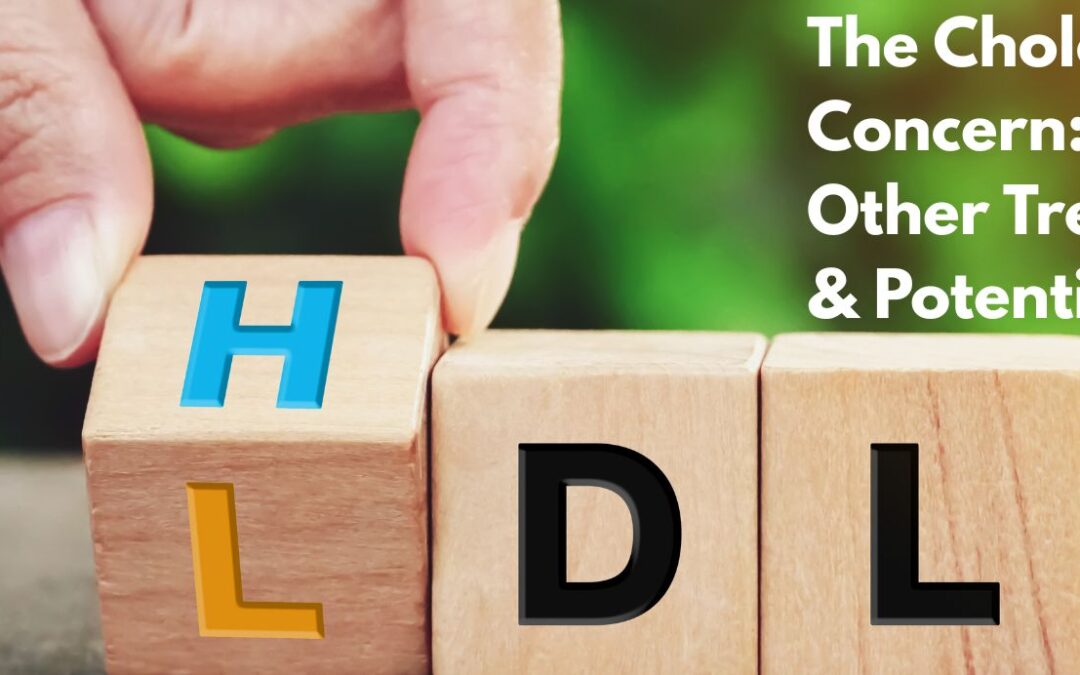

The Cholesterol Concern:
Statins, Other Treatments, & Potential Impacts
March 30, 2026
Host: Hon. Sam Rohrer
Guest: Dr. Lee Vliet
Note: This transcript is taken from a Stand in the Gap Today program aired on 3/30/26. To listen to the podcast, click HERE.
Disclaimer: While reasonable efforts have been made to provide an accurate transcription, the following is a representation of a mechanical transcription and as such, may not be a word for word transcript. Please listen to the audio version for any questions concerning the following dialogue.
Sam Rohrer:
Hello and welcome to this Monday edition of Stand in the Gap today as we begin this next to the last day in March and begin the first week of April. As we all know, at least I hope you all know that leads up to Good Friday and Easter Sunday this coming weekend. I trusted in the midst of this, well, the leading headline news, the broadening war in the Middle East and the increasing evidence of spiking inflation and sinking economies due to the shutting down of oil and natural gas exports, particularly from the Gulf region, that in the midst of all of this, and you’re going to hear more and more about it, but that we all keep our eyes fixed on the word of God and the unfolding will of God as we witness biblical prophecy literally unfolding before our very eyes. Standing on God’s word, which we talk about here all the time, our feet will never be moved.
Standing on human promises and worldly thought, we are standing on shifting sand. And that’s what the Bible says. And we can see it before us today. There’s literally no stability or credibility in any human government, including that which we see through policy making even today in our own capital of Washington DC, where there is no controlling fear of God. There’s no sense of accountability to God or men. And as a result, there’s an embracing of pragmatism over principle and the use of fear over faith in God. And when that’s the case, we can only anticipate more of what we see. How do we know that? Because that’s what the word of God says. Now, so the war in the Middle East dominating the global news, I’ll make just a few short comments on today’s program and plan on discussing more from a prophetical perspective when Dr. Carl Broggi joins me on Wednesday of this week on our Israel Middle East and biblical prophecy focus.
Here are my just brief comments. The war in the Middle East is expanding and it bears all the earmarks of a lengthy, expensive war with Russia, China, and even North Korea contributing significant assets in assistance to Iran. Those are facts that are more clear as of this weekend. Though the US would like a convenient off-ramp, I think some anyways do, the US threatening the active use of up to now 50,000 soldiers on the ground, not on the ground yet, but being prepared to potentially be on the ground in Iran suggests otherwise. And sadly, over the weekend, with the US experiencing a significant loss with an irreplaceable AWACS plane, it cost $500 million for that one plane. It was destroyed on the ground by Iran in the capital of Saudi Arabia and Riyadh. So the ability of the United States to conduct critical surveillance has been greatly harmed.
That was a major component, that plane. So this week we’ll likely see, I think, a further expansion and a scenario where it is likely that Iran and her allies will become more firmly connected and perhaps have actually set a trap into which the Trump administration has stepped. Time will tell, as always, as further events unfold. So that being said, I’m just going to let that there and move on to today’s emphasis, which is on health and wellness with special guest Dr. Lee Vliet, president and CEO of Truth for Health Foundation. As she joins me again for a look into health and the title I’ve chosen to frame today’s conversation is this, The Cholesterol Concern: Statins, other treatments and potential impacts. No doubt everyone listening to me or most listening to me now are aware of the dangers of high cholesterol. If you’re a middle-aged or older adult, you may even be on some type of medicine or regimen to lower your cholesterol numbers.
But what should we know about this reality of life, this lipoprotein referred to as cholesterol? Is the concern valid or not? Is the normal treatment necessary or not? Well, we’re going to address that question today here on stand in the gap today. And Dr. Lee, welcome to the program. It’s great to have you back again. It’s been a couple of months and too long.
Lee Vliet:
Thanks so much, Pastor Sam. It’s always wonderful to be with
Sam Rohrer:
You. Dr. Lee, let’s get right into this. If we can, I like to start at definitions. So before we get into the substance of talking about the types of cholesterol and the treatment for appropriate levels of cholesterol with statins primarily and other things, I’d like for you to define the term. What is cholesterol? You’ve talked about dietary cholesterol. A lot of people may not know that, define that as well. And then the role that cholesterol plays in normal human health. Could you do that please?
Lee Vliet:
Well, I’ll try to give a short version of that. It’s actually a complicated topic. Cholesterol is needed for many functions in the human body. Cholesterol is one of the blood fats and it’s made by the liver because it’s needed for myelination of nerves and it’s needed for brain function. It’s needed as the building block for our hormones and in particular estrogen in women and progesterone and DHEA, and then also testosterone in men. So cholesterol is not the bad guy that we’ve been made to believe with the marketing campaign about high cholesterol. In fact, some of the current studies are actually showing that older people need higher cholesterol for their brain function and myelination of nerves and hormone production. So it’s really important not to focus on just the number of one measure, one marker in the bloodstream, because heart disease is actually a complication that occurs from many factors, including inflammation and blood clots and the stress in our lives, sleep deprivation, highly processed foods, seed oils.
There are all kinds of factors contributing to the development of heart disease that go way beyond just cholesterol. And a big one is insulin resistance, Pastor Sam, that doctors are not talking with patients about for the most part.
And that is, it’s very concerning to me because in the US, we focus too much on cholesterol and use of statins, which have long-term risk, long-term complications and side effects, and they’re not really treating all of these other underlying causes of heart disease.
Sam Rohrer:
All right. Well, that sets us up really well for a breakout going into the next segment of the program. Ladies and gentlemen, we’re pretty close to the break right now. Dr. Lee, 30 seconds here. What caused this whole issue of cholesterol to become an issue? Seemed like it came out of the blue. Just how did that happen briefly?
Lee Vliet:
They started marketing it to consumers and pushing the numbers down once statins were invented and big pharma could make a huge profit. Statins are one of the largest moneymakers for big pharma around the world.
Sam Rohrer:
Ah, so you’re saying that it’s more of a marketing effort and it brings us back to big pharma and profits. Oh, that’s interesting. All right, ladies and gentlemen, stay with us because I think hopefully this has been intriguing as we begin. Our theme today is this, the cholesterol concern, statins, we’re going to talk about that, but other treatments and then potential impacts. So when we come back, I’m going to talk to Dr. Lee Valet, who’s my guest today. Share our website is truthforhealth.org. We’ll talk about the cholesterol concern, the good, the bad, and the other wise. We’ll work all that out here in the next segment. Well, if you’re just joining us today, our theme today is something that I would say likely has interest all of you who were listening, likely have heard about bits and pieces of what we’re talking about, but not had a focus on it.
And that is this, the matter of cholesterol. Do you have high cholesterol? How do you know? Is that good or is it bad? Well, our theme today is just the cholesterol concerns, statins, other treatments and potential impacts. And my guest is Dr. Lee Veit. She’s the president and the CEO of Truth for Health Foundation, been with me a number of times in the past, but she’s an independent physician, does a lot of research in the area of preventive and climataric medicine, and she has a website at truthforhealth.org, which I’ll give again in the program. But Dr. Lee, normally when the word cholesterol is mentioned, it’s often put into the same, I’m going to say, fearful category as almost like diabetes or cancer or something else. But in reality, as you said in the last segment, that’s not the way it ought to be, but I have sensed, and you can comment on it if you want, that while that’s not true, many doctors who have not embraced a wellness and preventive type approach as you have to health, they either don’t know or don’t take the time to explain the truth about cholesterol to their patients or address the issue that I’m going to say in balance.
And that’s part of my hope that we’ll further explain some of this here today. So let’s move now into the understanding of the types of cholesterol. Some cholesterol is actually good, talked about that. Some is truly bad. Would you identify now the actual types of cholesterol, or at least the more common types, and then identify whether they are good or bad, and briefly, what makes them good or bad?
Lee Vliet:
Well, Pastor Sam, one of the things I want to start with is that what people need to understand is that in the 1950s and ’60s, a cholesterol of 350 was normal, and people walked around with cholesterols and levels of 300 all the time, and it was considered healthy. And even in the 70s and early 80s, as I’m starting practice, those numbers were still considered normal. It was after the statins were invented that we began seeing the push to get the cholesterol down lower and not looking at the broader effects of all the functions cholesterol’s used for in the body, including our immune function and brain function and hormone function, as I mentioned. But the other thing is that what people don’t realize is the protocols, doctors are given protocols by insurance companies. And you’ve been hearing a lot about the insurance cartel and the insurance control of medicine and all of the profits from all the incentives that were given to them under Obamacare, but what people don’t realize is that the insurance carrier guidelines are in fact determining a lot of the things that doctors do for testing and treatment instead of looking at the bigger picture.
And we’re looking at over a trillion dollars have been spent on statins alone. It’s 25 billion a year in the US and they really have minuscule long-term benefits. The data shows that even if you take them for years, it only extends your life by a few days. And the focus is they don’t really … I want to talk about this first because you have to understand the push to address cholesterol is based on selling the drugs to do that, but statins don’t really lower cholesterol. That’s the marketing version. It actually blocks the critical enzyme in the process that makes a whole lot of metabolic aspects that the body needs. For example, CoQ10, which is our body’s core energy molecule that all of our muscles in our brain uses. Statins block the production of CoQ10. They block the … They inhibit heme A, which is another molecule that crashes cellular energy, so you feel tired all the time.
They suppress the production of molecules that are needed for brain function. It increases the risk of a memory loss and Parkinson’s disease, for example. And I mentioned the hormone blockage. They contribute
Sam Rohrer:
To diabetes. Dr. Lee, I want you to go into further detail on the statins in the next segment, but for right now, so people can understand it, can you identify the types of cholesterol good or bad and that kind of thing so people get an idea and understand what they are and what the testing is all about?
Lee Vliet:
Well, yes, the cholesterol profile measures, but that’s a very limited picture. That’s my point. The measuring the cholesterol numbers for total cholesterol, low density lipoprotein or LDL, high density lipoprotein or HDL and BLDL, and most profiles don’t even get into the more damaging types of cholesterol that are measured on specialty tests. And so you get told that these numbers are bad when in fact the HDL, the high density lipoprotein needs to be higher in order to bring the cholesterol back from … And keep it from being deposited in the arteries contributing to plaque and bring it back to the liver to be broken down. So it’s a misnomer to just focus on the number. It’s very misleading.
Sam Rohrer:
Okay. So, all right. So what you’re saying is that there are at least two different types of cholesterol, the LDL, the low density, and that’s what you said, that would be the bad cholesterol. There’s the HDL or the high density lipoprotein cholesterol. That’s the good cholesterol. And you mentioned another type. BDL, you mentioned … Now, let me ask a question about this. Triglycerides are something that also show up in the test. Are triglycerides a cholesterol or are they part about it? I mean, they tended in the test, they seem like they go together. What is that?
Lee Vliet:
Glycerides are actually an independent risk factor for women in heart disease more so than cholesterol, but you don’t hear a lot about that. Triglycerides are … High triglycerides are a risk factor for not only heart disease, but also pancreatitis, and they contribute to insulin resistance and diabetes. So one of the things that we try to do … In fact, one of the ratios that’s actually more instructive is to take your triglycerides number and divide it by HDL to look at whether the ratio is too high. If that number … When you divide triglycerides by HDL, the good cholesterol, and that number is higher than about one to 1.5 at the most, then that’s a risk factor for insulin resistance and diabetes, which are in turn risk factors, bigger risk factors for heart disease than your cholesterol number.
Sam Rohrer:
Okay. So let me ask you a question. You’ve talked about numbers. You’ve got LDL, the bad, HDL, high density, lipoprotein, the good. All right. Now, is there a number that for either one of them, like the LDL, you mentioned earlier that years ago, the total cholesterol, which I think is the number you’re referring to was like in the 300. Well, that was acceptable at that point, but now that’s not acceptable. What is the bad cholesterol, the LDL? What is a bad number of LDL, or is any measurement of LDL bad?
Lee Vliet:
It doesn’t work that way. That is contributing to the problem when you focus on a number is bad. You have to look at the whole person. You have to look at the other risk factors, the insulin resistance, oxidative stress, the presence of micro blood clots, the look at what’s happening to other pathways in the body. You cannot focus. That’s what’s wrong with current practice in medicine, in my opinion, and opinion of a lot of people who are trying to focus on all these other contributors to heart disease. You can’t just focus on a number of LDL and say, “This number’s bad for every person across the board. It doesn’t work that way, and that’s what we’re trying to do. ” That is the problem. So no, I’m not going to try and give you a number that’s bad across the board, because that’s not how the body works.
It wasn’t how God designed us.
Sam Rohrer:
Okay. And I was thinking that’s probably what you would say, because that compartmentalization here in medicine or as the numbers, it’s the same kind of thing we tend to do when we look at economics or the political scene or whatever, but you just take a slice. And if that’s all you consider, you could walk away with a very, very skewed approach. And that’s really what you’re saying. So in this case, with … Well, we don’t have too much more time here. So from that perspective, you did say that at one point, the 300 number for total cholesterol was an okay number. What is that comparison number? Now, what is that 300 compared to now?
Lee Vliet:
Cardiologists in the US are pushing total cholesterol down below 150, which is lower than what is needed for the rest of the body to function and the cardiologists are not studying the brain. They’re not looking at cognitive function. They’re not looking at men’s testosterone that is totally blocked when you push cholesterol that low. You don’t have the building blocks to make testosterone. No wonder men are tired and their muscles hurt and they get fat around the middle and they can’t think clearly and they don’t sleep normally.
Sam Rohrer:
Okay. And with that, we’re out of time, Dr. Lee. Hold onto that. We’ll come back. Ladies and gentlemen, we’ll talk little bit further when we come back. I’m talking with Dr. Lee Vliet today. She has a website, truthforhealth.org. We’re talking about the concern or the cholesterol concern. We’ll build out a little bit more on statin and then treatments if in fact one’s cholesterol is too high. All right, Dr. Lee, again, your website is truthforhealth.org, and there’s a lot of information on that site. And I just wanted to give that again as we go further into this. And here’s a question I have for you. I know I asked you a question about numbers. What number would be too high or too low when it came to like an LDL low density or the bad cholesterol as an example or the HDL, the good. I’m sure there’s no limit to how good that could be, but then you gave a total number, 300 years ago, was acceptable.
Now it’s down to about 150 cut in half, and you are suggesting, or even more than that, that really is a cause of big pharma’s marketing program to further statins. So if you force down the acceptable number, then you actually force people into some kind of a treatment which they just happen to have. Those are my words for what we’re looking at here, but let’s go further into that. And here’s the question I have for you. And that is, okay, cholesterol, there’s good, there’s bad, there’s a total number, was acceptable, now it’s 150. Here’s my question. What is the actual harm caused by unacceptable cholesterol numbers, whether that’s 150 or whether that’s 300? And how does that relate to inflammation, which at the end of the day is the real problem kind of behind everything? Can you make that connection?
Lee Vliet:
Pastor Sam, the harm comes from the damage to cellular energy pathways, the inflammation, micro blood clots, the oxidative stress. Those are the factors that tend to drive the risk factors for heart disease. Plaque, for example, in the arteries is not just about cholesterol. That’s why we just can’t focus on just cholesterol numbers. Plaque is a mixture of fats, immune cells, inflammatory signals, fibrin, calcium, and damaged tissue, and it develops over years as the body is trying to repair injury to blood vessel walls, which in people who’ve gotten the COVID shot is even more damaged because the COVID shot, spike protein and lipid nanoparticles damage the blood vessels further. So you’ve got to think about the fact that the drugs that have been marketed to supposedly treat cholesterol and heart disease are actually mitochondrial toxins. And when you damage the mitochondria and the ability to generate energy for the cells to work properly, you’re building up inflammation and oxidative stress, which in turn damages the lining of the blood vessels, which in turn contributes more to the risk of heart disease.
Inflammation and oxidative stress, along with processed foods, seed oils, lack of exercise, stress and lack of sleep, all of that contributes to the risk of insulin resistance, which is an inflammatory driver of more damage and it becomes of end weight gain, which creates more insulin resistance. So it becomes a vicious cycle.
Sam Rohrer:
Okay. So let me- Our
Lee Vliet:
Whole program focused on all of this together as an integrated approach and people need help in addressing these other factors and getting off of this bandwagon that getting a cholesterol number to the insurance guideline targets that cardiology is using is not going to solve the bigger problem of all these other factors.
Sam Rohrer:
Okay. I want to walk further with you into this here right now, but let me just summarize something that you said just to help in it because I’ve dealt with other programs, not with you, but other programs with other folks on the aspects of inflammation and all of that. But let me just take, if I can, summarize what you just said briefly and see if you agree with it or not. Inflammation is the bad boy in the entire system, whether it’s oxidative stress or it’s whatever it may be, that inflammation caused by a number of things, irritates perhaps the lining of the arteries and the veins, whatever. And when that happens, it gives places for the cholesterol that’s flowing through, cholesterol needed for your brain and for other things. It’ll stick to those things on the wall and that can build up your plaque and that can be your problem, but your inflammation comes first as a cause of that.
Did I summarize that appropriately?
Lee Vliet:
Yeah, fairly well. The evidence for an inflammatory thrombotic or blood clot underlying mechanism of heart disease, the evidence for that is actually far stronger than the evidence supporting cholesterol alone, which is what we’re currently operating under. The inflammation and the fact, for example, you’ve seen everybody knows people who’ve had heart attacks and strokes following the COVID shots. It’s rampant. And that has to do with the fact that the COVID shots, like protein and lipid endoparticle intensified inflammatory damage to the blood vessels. It wasn’t increasing cholesterol. That wasn’t why people were having heart attacks and strokes after the shot. It was the inflammatory micro blood clot combination of inflammation and the microblood clots and endothelial damage that’s the lining of the blood vessels.
Sam Rohrer:
Okay. Okay. So
Lee Vliet:
All of that together is what we’ve got to help people address.
Sam Rohrer:
Again, I think what you’re saying right now is perfect, not silo approach. The whole aspect’s got to be taken into account. That’s not what modern medicine is doing. That’s not what’s happening. That’s what you do and that’s what my own personal doc does that’s what you’re talking about and it makes a gigantic difference. But let’s go back onto statin thing here because now we’re in this window, this period of time where the quote unquote official number, total cholesterol is about a 150 as an example. And you say it’s about half of what it should be. Now, all right. When as you, as a physician, when do you begin to say, “All right, you got a cholesterol problem, Mr. Or Mrs. Patient, and do statins of any type of any flavor a part of your medical toolbox, put it that way, for treatment of cholesterol numbers that are out of whack or too high?”
Lee Vliet:
Sam, you’re trying to box me into a one step approach and that’s not how the body works. It’s not how I practice medicine. I look at the whole person and there are patients in my practice who are on statins, however, I will say this, most of them are having side effects and we work to get them off and get onto all the other factors that will help treatment more effectively. For example, most patients are never told that metformin and treating insulin resistance actually can have better impact on glucose, triglycerides, and lipids than the statins do. And they don’t get a review of the various options. You can accomplish improvements in cardiovascular disease risk, treating insulin resistance, loss of hormones, stress management, sunlight, vitamin D, exercise, whole foods, and you can get better results over time with a combination of strategies than what the data actually shows for statin benefits over time in large populations.
Sam Rohrer:
So
Lee Vliet:
I just think it’s wrong to focus on one thing and one category of medicine.
Sam Rohrer:
Okay. And I agree with you, Dr. Lee, and I was not trying to box you in, in a bad way. I was trying to further discussion on, again, the holistic approach that’s got to be taken place, but that’s not what modern medicine is doing. That’s not what policies out of Washington are doing. That’s not what the insurance companies are doing. If anything, they’re siloing everything and not doing the approach that you are taking. But since we are on this matter of statin, so it’s so common and it’s out there, if a person is on a statin, as an example, maybe it’s a very low dose, is there something … Do you ever work with a patient that may be on it and just say, “All right,” because you mentioned if you’re on a statin, it inhibits the intake of Q10 as an example or whatever and other things.
Can you supplement with some of those things that maybe that statin would be harmful to and in the end have a combination or treatment, a combination where that could be a part? Or have you found over time there are other treatments that are actually better for where a statin is not needed at all? Is that a fair question?
Lee Vliet:
Well, absolutely. I’m doing things all the time with patients where a cardiologist or another physician may have put them on a statin and what I’m trying to do is identify all the other risk factors that need to be taken care of so that the dose of the statin can be lowered because side effects are dose related. But yes, absolutely anyone taking a statin, in my opinion, should be looking at CoQ10, vitamin K. They may need vitamin D because It suppresses vitamin D production. And the other thing is most of the men that I see who’ve been put on statins are hypogonadal, which means they’re low testosterone, which increases insulin resistance and other risk factors for heart disease, as well as bone loss, muscle loss, and cognitive dysfunction. So I’m actually working with my patients to improve testosterone.
Sam Rohrer:
Okay. Let’s talk about that a little bit further. We’re about out of time here. Let’s talk about that a little bit further. Ladies and gentlemen, stay with us. We’re going to conclude with a little bit of a balanced approach and those things that we really do need, even regardless, QQ10, vitamin K, D, men, if you’re on statin, what else you may need? All that more. All right, Dr. Lee, as we go into our final segment, we’ve covered just the highlights and you have presented entire forums and can go days. All of these different aspects we’re talking about today with cholesterol, the types of cholesterol, what makes it work, what makes it doesn’t work, the connection with the liver that produces it, foods that augment it, all of those types of things. And obviously it’s a major challenge always to try and take a topic like this and bookend it and bring it into a completion here in one hour.
Now you’re doing a good job and I want to thank you for it. And I do want to say, I do appreciate so much your approach to the holistic aspect of dealing with human health and recognizing that we start with how God has made us and understand that and then work within that and then taking everything into context which you have made very, very clear in the program because I think that is so very, very important. But as we try and conclude here a little bit, because of the fact that the pharmaceutical industry, driven by profits, with the help of government, have gotten overall acceptable numbers in the area of cholesterol, you said it used to be 300, now it’s now 150. You force it down and then you create a solution which you happen to have. You say statins are in that category, maybe other things too, but nonetheless, it is there.
And you said altogether, it’s about a trillion dollar industry. I think you said 25 billion a year or something of that flavor. So it’s a big deal. All right. Now, that being the case, most people are probably therefore on some level of statin. But you are saying that with statin, there are things that it depreciates intake of KQ10 and you need things like vitamin K and talk about a lowering of testosterone levels for men, which is a big deal, shows up, but it’s not generally treated. Okay. I want you to go a little bit further on that and just talk to the person who likely may be on some level of statin since that’s probably most people and say, what should they be doing? Should they be supplementing? With what? And how do they know whether their levels are up or down when that’s not normally tested?
Can you take that little bit of an approach here as we try to wrap things up?
Lee Vliet:
Let me give a general educational view because I can’t make recommendations for people I haven’t evaluated medically, but the general point here is that there are a half dozen or so other risk factors that need to be assessed. What is your diet? Are you exercising? Do you get optimal sleep? Are you under a lot of stress? Are you eating high processed foods? Do you get sunlight? Are you overweight? What is insulin resistance? So there are testing markers that people need to have done. For example, fasting insulin along with glucose and lipids, the high sensitive C-reactive protein, D-dimer, the triglyceride HDL ratio, the apolipoproteins. There are a number of tested vitamin K, vitamin D levels, and looking at the various blood tests that are going to better guide you to a holistic picture of what strategies to use. And then you’ve got to look at fundamentally that you’ve got to address insulin resistance, oxidative stress, mitochondrial damage, and lifestyle factors, weight balance, and look at getting all of this addressed.
And then, and there are many ways to do that. Some prescription medicines, other lifestyle and supplements and natural medicines, and then work with helping each person systematically go through a proper full comprehensive evaluation and then target the things that will help that individual. We did a whole program on this on our Faith Over Fear. It’s archived on my website. If you go to truthforhealth.org, you have an hour and a half seminar where we address the medical aspects of all of this and a comprehensive approach and some of the lifestyle and other strategies, including nutritional and natural medicines, as well as prescriptions. And I encourage people to do that because it’s a more integrative approach than you’re going to get in most medical settings. And as I run out of time today, I want, and we run out of time, I want to emphasize to people, God didn’t design our bodies to operate in a vacuum in a solo one size fits all and one measure, one medicine.
We’ve got to look at the whole person and look at all of the things God gives us a mind to make choices and look at all of the things that we need to do to be responsible to improve our health choices and our strategies. We know what we need to do and most of the time people just get lazy and don’t want to do it or they don’t get taught what they need to know. So we’re teaching people and we’re also teaching people how to make better choices
And take care of the temple of our body, which is God’s gift to us through which the Holy Spirit operates in this world.
Sam Rohrer:
And that you just really summed that up in extraordinarily good way. That is the philosophy that we share here on the program and we have before, and you just really did that in a exceptional way. We only have about a minute and a half left here, but there are, as a result of the whole COVID experience, you’ve referred to that. We have a lot on this program and it’s created many difficulties in people and all of that. There are some things that have come up positively. For instance, people generally, if they’re aware of that, know that their vitamin D levels, they need to be aware of that and vitamin K and zinc and that kind of thing. Of those core vitamins, I know one of the programs you did where you talked about vitamin D, I believe, that the numbers given are way too low for what people really have.
Can you just take those three, D, K, and zinc and say what’s a good level for people to strive for in their
Lee Vliet:
Body? Yeah, do that generally across the board. I think what we need to do, I would encourage people, read the detailed medical articles that I’ve written on our website under my health tips. There’s a whole recent one on vitamin D and the nuances of that and ranges to look at. And the other thing for people to do is go back to the basics on this program that goes through this step by step and then start asking your doctor to do the testing that you need to get better answers and more integrated approaches because that’s what’s ultimately going to help you improve the bigger picture of your health and have fewer side effects from medicines where they’re using a one size fits all.
Sam Rohrer:
Okay. We’re just about done, but on your website, truthforhealth.org, for instance, what you just referred to there of that, how to approach that overall, the types of tests that you ought to have in the blood work and that kind of thing, is that all on your site? Can people find that if they go there?
Lee Vliet:
Yes. Yes. There’s a button on the homepage that says click here for Dr. Lee’s health tips, which are my medical articles on all of this. And then there’s a button that says faith over fear programs. You can scroll back through all those. I did four programs on low testosterone in men. I did some on estrogen for women. I’ve done ones on the statin risk in depth and cardiovascular lifestyle strategies. So we have lots of things to guide people.
Sam Rohrer:
And that is fantastic, Dr. Lee Valid. Thank you so much for being with me. We’re at the end of the program today. And I didn’t know if we were going to be able to get all of this in, but you were able to do that. And I think we’ve directed people to the right place. Ladies and gentlemen, if any of this has intrigued you or you’d like to go for more information, finding truth is hard to do, but on these things we’re talking about today, you can find it at truthforhealth.org, truthforhealth.org, Dr. Lee Vliet, who’s the president and CEO of Truth for Health Foundation oversees that, and she’s been working in this area for a long, long time. Dr. Lee Vliet, thank you so much again for being with me today. What a pleasure. Ladies and gentlemen, thank you for being with us today. Again, join us back here tomorrow.
One of our guests will be here. I was going to tell you who, but I can’t tell you tomorrow. Join us tomorrow and then on Wednesday, Thursday-

Recent Comments