
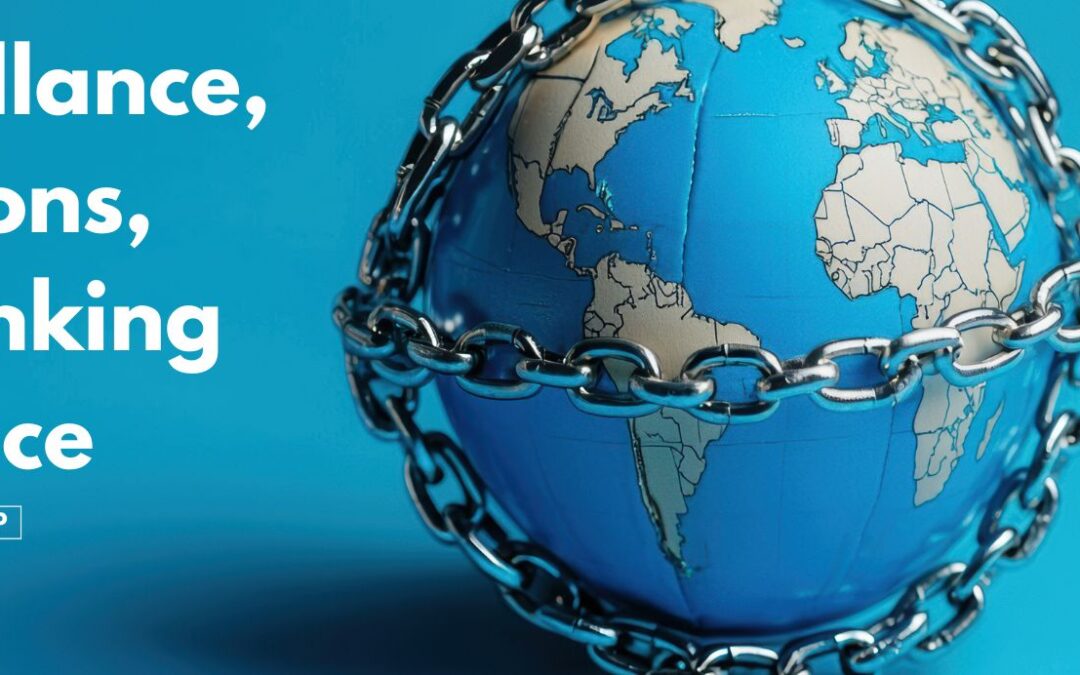

Surveillance, Sanctions, & Shrinking Influence
August 24, 2026
Host: Hon. Sam Rohrer
Guest: Leo Hohmann
Note: This transcript is taken from a Stand in the Gap Today program aired on 8/24/26. To listen to the podcast, click HERE.
Disclaimer: While reasonable efforts have been made to provide an accurate transcription, the following is a representation of a mechanical transcription and as such, may not be a word for word transcript. Please listen to the audio version for any questions concerning the following dialogue.
Sam Rohrer:
Hello and welcome to this Monday edition of Stand in the Gap Today and the beginning of the last full week of August. Hard to believe, isn’t it? But time does fly and with that, many things are happening. The events of the last weeks in the past weeks of this month alone, even over this weekend, certainly rival the busiest, I think, times in history. And whether it’s increasing economic events and concerns or things weather related like earthquakes or volcanoes or threats to Iran, for instance, by the administration or responding threats from Iran to America all the while in the midst of that over the weekend, seeing a new all out economic and verbal war of all things, our neighbor to the North, Canada. Now, today’s returning guest, independent journalist Leo Hohmann, and I will consider a number of actually his most recent articles as jumping off points for today’s conversation, which I’ve entitled Surveillance, Sanctions, and Shrinking Influence.
And that title is going to be addressed and we’ll pull off of that in reference to articles that he has written in the last couple of weeks, which I will just tell you upfront, he’s very profuse in his writing. Very good. And his website is leoHohmann.substack.com, where you can find all of them to which we’re referencing today. Well, you can also become a subscriber to his as well. Now, today we’re going to connect the dots between what I’m going to call macroeconomic strains, things at home that are affecting our economy broadly. We’re going to talk about escalating foreign policy coercion abroad, not just with Iran, but primarily, and the rapid expansion of a domestic surveillance grid about which we have talked on this program before. Now, we begin on the home front where long-term structural debt, I’m going to say refining or refining tightness, that was our oil refineries, shortness of fuel, and supply chain disruptions are beginning to converge.
As US national debt surges past historical milestones, and it did last week, and bond yields, that which are debt that we try to sell to other nations to buy our debt, they all face extraordinary upward pressure. The real economy though is feeling the pinch through, I’m going to say core commodities such as, and you’re hearing about this, US diesel crack spread, which is one thing we’ll talk about, recently crossed $100 a barrel for the very first time. A staggering margin premium that hits, well, basically everything. Long haul freight, our trucks that haul everything, agriculture and the equipment that makes our farms run, food distribution directly is impacted. And concurrently, major agricultural processors like, well, Tyson Foods last week are closing processing hubs. They’re closing three of them. Reason? Well, they’re citing cattle shortages because we have less cattle in America today than we did back when we were about half the size population wise.
They’re losing margin. There’s big things involved in that. And when energy costs spike and food supply chains centralize, the economic floor under working families begins to shift and that is being felt and we know that. So as Leo actually noted in a recent commentary on one of his articles, he said this, “A hard landing is visible ahead,” economic hard landing, “for farmers, for trucking, and well, for everything that requires food and energy.” And with that, welcome, Leo, to the program. Great to have you back again.
Leo Hohmann:
Thanks, Sam, for having me back.
Sam Rohrer:
Leo, let’s get right into one. When we say basic fuel measurements, whether it’s such as strategic petroleum reserve levels, which are at the bottom, diesel crack spreads, I just mentioned that, hitting record highs, diesel prices now per gallon, $7, over $7 in California, alongside major beef plant closures like Tyson. How are these distinct supply chain shocks? I’m going to call them because they are. How are they going to impact and squeeze, I’m going to say, independent American agriculture and freight, which frankly is our food and everything else that we live on?
Leo Hohmann:
Well, frankly, I think it’s just starting, Sam, and we’re going to see it get a lot worse. That’s why I’m advising people to actually stock up on ground beef and what other forms of beef they might consume now, if you can afford it. And maybe invest in a freezer if you don’t have one, a larger freezer if you do. Because all of the signs point to a perfect storm of
Sam Rohrer:
Beef
Leo Hohmann:
And frankly all meat, but especially the first casualty will be the beef because our national herd is that it’s of cattle. Beef cattle is at its lowest point since 1952. I mean, think about that. I wasn’t even born yet in 1952. I wasn’t even a thought yet. And here we are. And everything that we see happening is leading towards that herd getting even smaller. The most recent bombshell came last week when President Trump announced he is going to import 300 metric tons of ground beef from Argentina. Now, number one, Argentina has very subpar quality beef. The Chinese of all people refuse to import Argentinian beef because they found it didn’t pass their test for quality. It was full of bacteria and microplastics and all sorts of issues. Of course, President Trump says it’ll be the best and highest quality beef we’ve ever tasted. But the facts speak otherwise.
And what is this going to do? Importing foreign beef? It’s going to put further pressure on American cattle ranchers. We just saw Tyson Foods saying that they’re closing processing plants because the amount of incoming meat is falling catastrophically in some cases in some states. And so they’re closing meat processing plants. The herd is going to get smaller. More cattlemen are going to be put out of business by the importation of this foreign beef. American consumers are going to start getting sick if they eat it. It’s just a big mess. And President Trump always seems to make the wrong decision when he’s faced with a crisis. When things are going good, it seems like President Trump in his first term before COVID hit was a fine president. But whenever he gets hit with a crisis, it seems like he is given several options, I would think, by his advisors.
And he always seems to go with the wrong one. The one that exacerbates the problem instead of fixing it.
Sam Rohrer:
And that is going to be a problem. We don’t have enough time to get into another subject at this point. Leo, I may carry it over to the next program. And that is the fact we’ve now crossed $40 trillion in debt. Ladies and gentlemen, you know that. And I have a whole bit of numbers. I won’t be able to probably have time to give it, but I will say this, that the rate of spending now and debt accumulation is at a faster pace under this administration than was ever under Joe Biden or Barack Obama or in the first term of this president. It doesn’t make any difference which administration is in power. It goes up and it’s going up faster literally every year. I did a study on it. I won’t be able to get into all of it, but you combine those together. These are major economic issues.
Stay with us and we’ll pick up in just a moment.
For just joining us today, thank you for being here with us on this first day of the last week of August. My titles today is this, Surveillance, Sanctions and Shrinking Influence. And my special guest, a returning guest, Leo Hohman, author, researcher and independent investigative journalist with me generally once a month. And he writes about and covers a broad range of items of interest. And today we’re looking back and picking up from some that have been written in the last several weeks, which you can find them if you would like. And I would encourage you to do that on his website at Leo Hohmann. Two Ns on Hohmann, H-O-H-M-A-N-N, dot substack.com. Anyway, that’s where we’re going. So stay with us. We just talked a little bit about economic things at home. Diesel prices going up as we know. Trade war with Canada that has now been initiated, which is a developing fiasco.
Difficult for Canadians. It’s going to be difficult for Americans and particularly those states that border Canada. There’s a whole lot involved in that, which we just basically slightly referenced. The debt, $40 trillion now the highest ever. And the thing that should be noted is spending and debt increases are up and moving at a faster rate today than they ever did during Joe Biden. Trump number one, 45, first term, way faster than Barack Obama, and faster than those who went before them. So the speed of all of it, and as we talked about much, it doesn’t really make any difference which party is involved in Washington. Congress approves and presidents love to spend regardless of what they say. And we’ll just leave it there. Now, with that being in mind, we talked about that in segment one a little bit, but lacking the fiscal strength because of our debt, we are losing an ability to, well, convince the world that they ought to listen to us.
We’re losing that fiscal strength because they know we’re in debt and they’re not buying our debt. We’re losing diplomatic leverage that was exercised in past decades. And this administration, as we all can witness, has increasingly chosen to utilize what I refer to from a policy perspective as policy by coercion versus historic diplomacy. Instead, favoring threats as we hear nearly every day. Intimidation techniques, threats of military pressure, sanctions, tariffs. Now in regard to Iran, what is being referred to as secondary sanctions. A new word that’s come up by Secretary Bessent of Secretary of the Treasury aimed at forcing global trade partners with Iran, in particular to force them into compliance. Now, that was just done by Secretary Treasury Scott Bessent, where he threatened secondary sanctions on China and any other nation doing business with Iran. And basically said, he used these words, “You’re either with us or against us,” stance.
That is a tough one. That’s not diplomacy. That’s coercion. And it really puts people into a fight or flight mode. And I think unfortunately what we’re seeing is that it’s causing people to fight and to align. Leo Pohman, my guest today, he wrote this in one article, “This type of economic warfare will only work if China cooperates. Without China on board, the economic assault on Iran is doomed to fail just as miserably as the unprovoked military effort that Washington has waged against that country.” He goes on to say, “I still believe the American empire is going down. We’re taking it pretty hard, ladies and gentlemen. We really are.” But that he goes on to say, “That doesn’t mean we have to go down with it.” And he says this, “Keep your eyes focused on Jesus, the king of kings.” Leo, Treasury Secretary Scott Bessent’s recently issued stark directive threatening secondary sanction I just talked about, effectively telling China and global powers you’re either with us or against us.
To me is a desperate move and it appears to be viewed that way by people all around the world. Here’s my question. Is this coercive approach succeeding in shutting down Iranian freight or is it more likely to expose the limits of US economic leverage? What do you think?
Leo Hohmann:
I think not only is it going to fail, but it’s going to fail catastrophically and it’s going to blow up in the face of the Trump administration and in a humiliating defeat. Which Trump is very, very much, as you know, averse to accepting any sort of defeat, even a small defeat. But unfortunately, his actions are going to lead to a large humiliating defeat. And it scares me, frankly, what his response will be when he suddenly recognizes the size of this defeat and the consequences. I truly fear that we’re heading towards a nuclear weapon being used against Iran. I see two things when I look at the Trump policy towards Iran. Obsession and desperation. Obsession and desperation. He’s obsessed with Iran for whatever reason. There’s various theories out there as to why it is, but you cannot deny that he is obsessed with taking down Iran.
The problem is that due to Iran’s geography, especially topography as well, and size of it and length of time to have organized and prepared for just such an American attack, it’s just an unwinnable war. And so he’s pivoting now, at least that’s the public face of his policy. We never know what’s really going on. It could be a ruse. But publicly, he’s pivoting from military confrontation of Iran because that failed to economic confrontation. The problem is that can only work if China is on board with it. And there’s folks out there, some of them whom I respect, who have put forth the theory that China has some sort of secret deal with the United States to cooperate economically with the destruction of the Iranian regime. I personally don’t see it. The Chinese foreign minister came out with a very strong statement over the weekend saying that economic warfare is not going to be the answer to the crisis in Iran with this closure of the strait of Hermes and all of what’s going on in the Middle East, that they need diplomacy.
It’ll be diplomacy and political solutions that are the answer. And China has this alliance with Russia and Russia is very close with Iran. And I just don’t see this secret deal, but I could be wrong. It is worth watching because if it is in existence, if there is some sort of a deal, then I think the administration will be successful in taking down Iran. But it’s not like in the past where under previous presidents, they all sanctioned heavily. They heavily sanctioned Iran. But under Bush, Clinton, then the second Bush and Obama, they had the rest of the world on board with their sanctions. That was the difference. China and Russia supported the sanctions. The United Nations, UN supported the sanctions. This time, Iran is not as isolated. They have friends in powerful countries such as Russia and I believe China helping them in this confrontation with America.
And so I do feel like Trump would do better to walk away now and take his losses now and it be a small loss, which he could somehow package as a win, rather than continue with this obsession and go down the road of now economic failure. And then what’s left? We were run out of ammunition. We have no more military options. The economic option has failed.
At that point, I see Trump resorting potentially to tactical nuclear weapons.
Sam Rohrer:
Well, Leo, I mean, there’s a lot of what you’re saying. I totally agree with as well. Sanctions, I’ve talked with a number of guests on this program. Sanctions have never ever won a war. I mean, it’s not just this administration, but this administration loves the idea of sanctions. But the Joe Biden administration threatened to bring Russia to its knees regarding Ukraine. And that was going to be the greatest collapse ever. Joe Biden said, “Well, that did not happen. And how long has Iran been sanctioned?” And it has not happened there. And what you’re saying is true. China, Russia, now Turkey’s coming into it. North Korea sending troops and missiles to help Russia. They’re all developing this alliance of which Iran is a kingpin because they all want Iranian oil, particularly China. So yeah, what you’re saying, it’s hard to believe that this pressure is all of a sudden going to work.
Comments.
Leo Hohmann:
Yeah. I mean, you’re absolutely right. I mean, we’ve failed to isolate Iran substantially enough for this economic policy to work. And so what we’re really doing is sending the message that if. The policy has pretty much been from the Trump administration, “Do what we say or else. Or else the military will strike you or else we’ll put tougher sanctions on you.” Well, an increasing number of countries are going to start saying, “Hmm, I think I’ll look at the or else because Iran seems to be doing pretty well by thumbing its nose at the US.” And so what’s going to happen is you’re going to have more and more countries joining BRICS, looking at joining BRICS, which is the alternative system to the American Global Financial Swift banking system. And BRICS has its own system that they’re working on that will operate independently of the United States.
And so we really see what the bottom line here is we’ve got an empire that is in transition mode. It can either look for a new system and flow with that peacefully
Sam Rohrer:
Or it
Leo Hohmann:
Can go down.
Sam Rohrer:
And ladies and gentlemen, stay with us when we come back, we’re going to shift back again here at home surveillance. Now coming back here to our nation, we spent a little bit of time in the last segment talking about Iran and the interaction. It’s actually more threat to other countries, be that Canada or Iran, or if you’re aware of South Korea last week where the president ordered the Secretary of Defense war, Hegseth, to stop participating in joint facilities or practices with South Korean military. Remember that? That happened. And then tried to buddy up with the president of this dictator of North Korea. Remember that? That also factors into all of this. And Leo, before we just go into talking about home, you were talking about the BRICS nations, Brazil, Russia, India, China, South Africa. So now about 40 nations that are in line to join that alternative system.
All designed, ladies and gentlemen, to get around our dollar. It’s contributing to why nobody wants our money. And as long as we continue to spend what we don’t have and that debt goes up, people are not buying our money. That is contributing to the desperation that’s coming out of Washington and our treasury and all of that. But Leo, I don’t know if you were aware or not, but I heard over the weekend I saw where actually the nations, the central bank in Europe and Germany, the main leader of economic power in Europe. But the point being Europe and the Central Bank of Europe is also, now they’ve announced they’ve actually worked out a deal to exchange with the BRICS nations as well and bypass the dollar. So Leo, as you talked about, what’s actually happening is not bringing the world to the point of respect and honor with our nation.
It’s driving them increasingly away. And rather than isolating them, ladies and gentlemen, we are being isolated. And that’s just an objective evaluation. It is, you can see it. Now let’s move back to here. Today we’re connecting some of these dots and we’re going to go back to this matter of being at home here and the issue of surveillance about which Leo has written much. Because as these other things are happening around our country in the middle of economic issues, whether it’s beef issues or drought issues or fire issues, things that are happening in our country, there are other things that are taking place that are being pushed through from Washington. And those are in the area of domestic security, increasing discussion about surveillance and the necessity to protect all that kind of stuff. And things are being put up in that degree. And that is actually happening here.
The infrastructure being deployed through artificial intelligence, data centers, automatic tracking grids, advanced compliance hardware and such things as Leo has written much about flock safety cameras they’re called, but they’re literally tracking everybody, everything. And they’re being set up all across the country. And so I’m just going to skip the rest of that introduction. Leo, go right to here because in your recent reporting on local law enforcement officers, you actually talked about them, some being forced to resign because of misuse of these cameras and databases. You’ve talked about how they are now spanning over 6,000 American cities and other things. Why is local and county level resistance to this automated surveillance web so critical right now before it becomes fully integrated nationwide? In other words, what do people need to know now and wake up to?
Leo Hohmann:
Well, I think the answer to that is threefold. Number one, I think law enforcement is just generally drawn to any new technology that they can get their hands on that they feel will make their jobs easier. If we could just see everything going on in the city, we could prevent bad things from happening before they happen. There is that mentality out there. The minority report, Tom Cruise, 2004 or five, whenever that movie came out, I don’t know, projected this type of attitude from law enforcement where they had a department of pre-crime and they were able to watch everything on a screen from their central nerve center at the police department. And they could send their response out to stop a crime before it actually happened through the use of not only cameras, but scooping up data, personal data on every citizen who lives or comes through the city.
And you can see that mentality. But that’s just one of the factors. I think it’s the funding that flows into these cities to buy this technology. There’s no end to it. You can get federal grants to buy this stuff. And then you’ve got the potential for graft and grifter where local officials are on the take and skimming a small part off the top of these deals whenever they’re made with these private companies. But then the third leg is the driving this is you’ve got the federal government, not only is there the sweetening of the pot, like I just described with all the money deals and the perks and the going golfing with the company salesperson that comes out to sell you the flock cameras and all of the perks. That’s the carrot. Excuse me. You’ve also got the stick. The US Department of Justice just came out last week and said that they are suing local governments who block these data centers and some of this other technology coming into their communities.
Flock camera’s probably part of it.That they’ll actually get a phone call or a knock on the door from someone from the Department of Justice, a federal agent telling them or a paper in the mail saying that they are going to be sued if they continue to block said technology. So it’s the carrot and the stick being worked against these local officials. Let’s be frank, a lot of them are not the smartest people in the community who get elected to these boards and councils. And they stand to profit greatly by going along with this and they stand to be punished and ridiculed if they don’t because now they’ve got a lawsuit pending against the community and they have to hire more lawyers to defend themselves. So yeah, it’s a big mess right now and it needs to somehow get, we need to get a handle
Sam Rohrer:
On it. We do need to get a handle on it. And our framers of our constitution, Leo, they knew that if people who in office did not voluntarily restrain and discipline their actions, that we would lose our representative government. Things always move to the easy route, totalitarianism, centralized government. The message that we hear far too often today that says, “Well, you know we need to run it like a business.” Well, there are some things we need to do, but we need to remember that anything you spend, you got to take from the taxpayer. And if you take it from them illegitimately, it’s theft. So that’s a good place to start. But just because one has the power to do something does not mean they have the right to do so. That’s all being forgotten. So it goes right to what you’re talking about, but one of the things you wrote about in your article, there was a Joseph Sandson, I don’t know this individual, who noted that in regard to surveillance and the constant AI monitoring databases, the cameras, all of these things.
He suggested that it pointed to a broader psychological pattern. He described it of authoritarianism taking root at the local level. Would you explain that?
Leo Hohmann:
Yeah. I think he called it psychopathic authoritarianism. He’s come out with a new book with that as part of the title. I don’t remember the subtitle, but I do advise listeners to check it out on Amazon, psychopathic authoritarianism or sociopathic authoritarianism. And he basically concludes after studying the issue that once these officials in government, whether it be local, state or federal level, get a taste of this power that this technology allows them to have, they can’t get enough of it. And control becomes an object in and of itself. Controlling the population. Controlling not just what we do, but what we think. And how do you do that? Data. They want more and more data, physical data.
Where are you going? Who are you visiting? For how long are you staying? When do you go outside of your pattern of visiting and do something different? How far from your house are you traveling? And why? What are you thinking? What are you putting on the internet? They want what’s called total information awareness. They want to be able to control every human being on the planet, which is why I have argued in the past with recent articles even that everything is really geared towards depopulation. They want to depopulate from eight billion people in the planet to about three or four billion because that is a more manageable. Why? That is more manageable. They can’t manage everything and every nuance of everybody’s life when we got seven or eight billion people on the planet. And so they want to call the herd, as they say, bring it down to a more manageable size and control every aspect from cradle to grave of every human being’s life.
Sam Rohrer:
And that is hard to believe, Leo, that there are actually people out there talking about we have too many people. The Bill Gates’ of the world and others, they made it very, very clear. World Economic Forum people made it very, very clear during the COVID and before the COVID and afterwards that there were too many people. And that’s a hard thing to think. Now we’re just about to break, so I’m just going to go into this. But ladies and gentlemen, think about this because the movement Move in the desire to centralize authority, government authority. It existed back in the days of the revolution in our country when it was the king. It goes all the way back to the Nebuchadnezzars. All the way back, doesn’t make any difference. People unrestrained and uncommitted to God’s word will always move because of the depravity of their heart to a desire to control people and own all things.
That’s what we’re seeing today. Don’t think it’s just the Democrats or it’s just the Republicans. It’s all who are outside dependency upon the Lord. We’ll be back in just a moment.
Well, as we go into our final segment, again, one quick reminder, Leo Hohmann, who is my guest today, has a website where all of his articles are placed. And you can find them Leo Hohmann, two Ns in that last name, Hohmann, dot substack.com. And again, is able to be independent, like a number of folks that I have with me on the program who are independent. They survive and they are able to live and do what they do because of the support of people who recognize what they are doing, just like we do here on this program. Anytime you’re under the control of a single funder or a major entity, we see it in government all over the media generally. When somebody becomes dependent, very difficult to be forced into writing and reporting with a bias. On this program, we’re not. And as I try to encourage all the time and have since this program began, what is the filter?
God’s word. Biblical worldview. If that is in place, looking at what God says, knowing what his design is, knowing the frailties of the human heart, those things put together and in our country, looking through the grid of the Constitution as well, became and are the guidelines and the filter, the lens through which we can look and examine. Put any of those aside. And what you hear may sound good, but may not at all be the truth. So that’s the point. I just want to lay that out there. All right. Now that being the case, we’ve traced through the program here starting on sovereign debt, our debt, our domestic supply chain disruptions, and that was in segment one, to Washington’s increasingly desperate reliance on policy by coercion and trying to make other countries do what we want.
And we do it because they need our dollar. And we use it as a hammer. But you use it wrongly as has been done, not just now, but for some time. The other countries say, “You know what? We are tired of being under the yoke of the United States.” And that’s what we’re seeing and that is happening. The last segment, domestic surveillance and the build out by seeing things in place from the cameras to the data centers. Why? Well, because there are those in government, uncontrolled and uncommitted to God’s law, view themselves as law. And they do many things because they can, not because it’s right. And all of these things are happening. Now, you take all that together. It’s easy for citizens to feel overwhelmed or perhaps tempted towards anxiety. But as believers and discerning citizens, our response cannot and must not be dictated by fear, but anchored in spiritual truth.
And that’s the only way that it will not be driven by fear. Practical stewardship is something that we believe we must do. And that comes down to local community resilience. Things happen locally and we need to concentrate on that. So with all of those things in place, when we do that, it causes us to go to the point of understanding that, all right, when we see these things happen, there are certain things that we need to do to build a resilience and understand the supply lines, those things that allow us to continue to live, protect our household privacy and maintain an unshakeable biblical perspective that is the key. We can’t put our head in the sand, nor should we enter into denial, nor can we automatically trust what is being told by anyone in government or by any favored politician at any given point in time for someone that we may or may not have voted for.
It doesn’t make any difference. Now all that being done, trust in God is where we need to go. Leo, given how rapidly our economic pressures and these supply chain consolidations and all are taking place, what would you say are some practical steps that families and local communities should take to build, I’m going to say, physical and financial resilience to the point that they are able to do so?
Leo Hohmann:
Yeah. I mean, that really does depend on the person and what type of resources and
Technological savvy that they have access to. There’s certain technological ways that you can. You can’t avoid this surveillance. I mean, I guess I should start there. It’s so pervasive now. I mean, I live in a town of outside of the county seat of Coweta County, Georgia. It is such a small town. I don’t think the population is more than 400 people. And we have recently had flock cameras pop up on the main drag through town. So just because you’re in a small town or even a rural outpost somewhere doesn’t mean that you’re going to be able to avoid this surveillance. And there is some ways that you can try to block some of it if you have some technological savvy. Some of it works, some of it probably doesn’t. But something everybody could do is talk to your local sheriff. He’s a constitutional officer elected by the people who is sworn to uphold the Constitution of the United States.
Tell them that you don’t call him and tell him you don’t appreciate these flock cameras and other similar cameras and surveillance devices going up in your city or county. You consider it a blatant violation of your Fourth Amendment rights. And our founding fathers would probably roll over in their graves if they knew we had such a thing.
Scanning everybody’s license plate, identifying everybody’s vehicle right down to a dent or a scratch or a bumper sticker that you might have on it. And then these things are also referenced across state lines. So they share this information. It’s not just within your own state. Another thing you can do, and this is probably going to be the most powerful thing, form a citizens group and sue them. This is truthfully, probably the only thing that a lot of these local town councils and boards are going to listen to. And I know some areas where it’s happened and they are making progress. So those are some practical steps with the last one being the most powerful.
Sam Rohrer:
Okay. Leah, we have about two minutes left here. Anything you’d like to conclude with that you haven’t shared already about how our listeners can retain and develop, not a spirit of fear, but a trust in the Lord, a biblical mindset. And actually you’ve already shared some of it, but walk through these days with a plan of action to the extent that we can do what we can do.
Leo Hohmann:
I think that’s a great question. And I always tell people to start off with, we have to recognize that we’re living in the end times and what that means. I mean, people talk about, oh, it’s going to be so exciting living in the end time. Well, it may be exciting from one point of view, but from another point of view, I think it’s going to get difficult and uncomfortable because that’s what the Bible says is going to happen in the end times for Christian believers. But Jesus said, store up your rewards in heaven. If we all have our eggs in one earthly basket, I think we’re going to be disappointed. I think we run the risk of falling into spiritual disaster, frankly, with despair and all of that. So if we focus on the heavenly rewards, we’re not so invested here on earth and what’s happening, even though we want to keep abreast of it and prepare to our best ability.
And that varies by person and by family. Ultimately we know that heaven is our destination and that’s what gives us our joy. We don’t want to lose that.
Sam Rohrer:
Leo, with that, we’re at the end. Thank you for that. And I’m just going to close in prayer. Heavenly Father, take what Leo said and we’ve shared in the program here today. And I pray that you would use this information to help all of our listeners who are all being impacted to one degree or another by the things we’ve shared today to be more fervent in looking into your word, putting their trust more firmly in you than in anyone else Lord, because you never disappoint and you never fail. And with that, we close the program and we thank you, Lord. Amen. Leo, thank you so much for being with us today. Always a pleasure to have you on board and honored to have you here. Ladies and gentlemen, thank you for being with us today. And the program has been a help to you in any regard.
Access it on our site or our website or on our app, stand in the gap and forward it, share it with a friend.

Recent Comments