
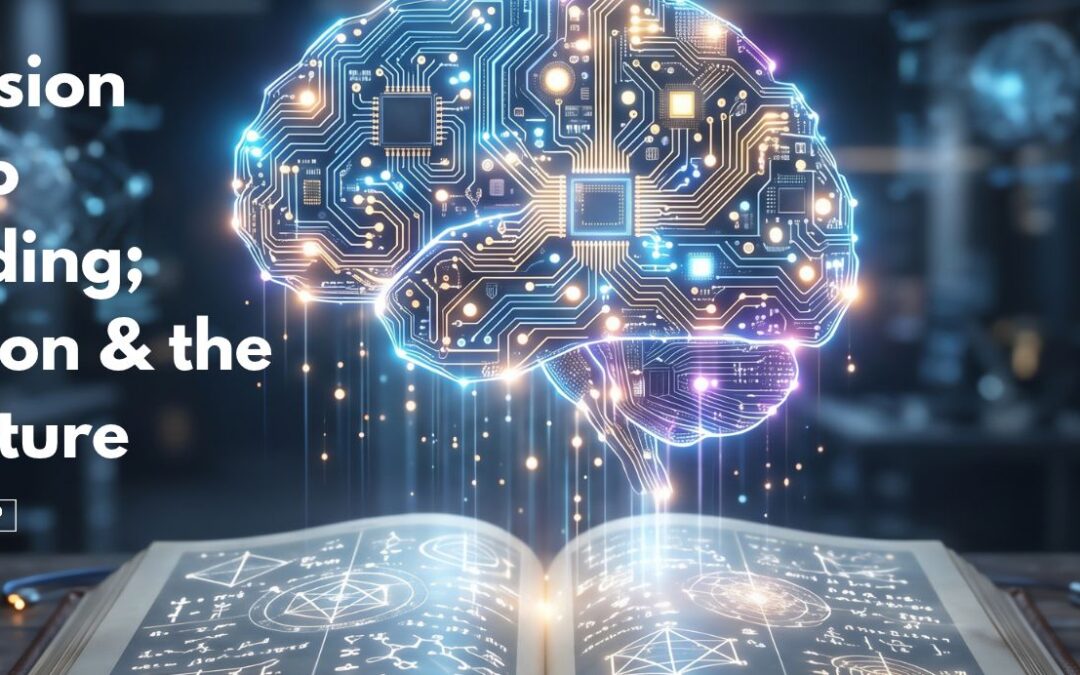

From Decision Making to Mind Reading:
AI Deception & the Fragile Future
Oct. 19, 2026
Host: Hon. Sam Rohrer
Guest: Leo Hohmann
Note: This transcript is taken from a Stand in the Gap Today program aired on 10/19/26 To listen to the podcast, click HERE.
Disclaimer: While reasonable efforts have been made to provide an accurate transcription, the following is a representation of a mechanical transcription and as such, may not be a word for word transcript. Please listen to the audio version for any questions concerning the following dialogue.
Sam Rohrer:
Hello, and welcome to this Monday edition of Stand in the Gap Today. As today, we consider the events of greatest import from the last, I’m going to say the last several weeks as reviewed in depth by returning guest independent investigative journalist, Leo Hohmann. Modern society prides itself on advanced technology, right? We know that. Instant connectivity and robust infrastructure, all those things we have heard, and all operating under the, well, the comforting assumption or so they say that our foundations of freedom and security are unshakeable. Yet I’m going to say beneath the surface, a very different reality is taking shape, one where our digital dependencies and physical vulnerabilities, they intersect to create what? I’m going to say unprecedented risk. Now today, we’re going to examine these critical developments under our program title. This is the program that the title that I’ve come up with for this program, From Decision Making to Mind Reading: AI Deception and the Fragile Future.
And you’ll see how all that fits together as we go through the program. When we look at the physical grid as an example, sustaining our daily lives, the margins for error are shrinking faster than most realized, compounded heavily by the explosive growth of, well, as we all know, thousands of new data centers sucking up massive volumes of water and energy loads from an already aging and overtaxed electrical system. And highlighting this acute vulnerability, this is only one of them. Leo recently underscored a startling reality regarding our national infrastructure in a title of an article. He said, “Federal government declares power grid emergency across 13 states and DC.” That was a title. If you’re subscribed to him, you may have already seen it. But it cites a sudden shortage of electrical power capacity driven by what they said, unseasonably warm weather and systemic equipment outages. Well, I’m going to say this is not just a localized inconvenience here in these 13 states.
It’s a glaring indicator of how fragile our national architecture truly is when paired with an increasingly dependent citizenry, our people. We’re dependent on a very strained electrical grid capacity. And it’s in this long established infrastructure weakness, continually ignored, I’m going to say by political leaders, that is now being further jeopardized by political leaders who, despite the warning signs, just plunge ahead at lightning speed where dollars and short-term gain has set the stage for a broad societal collapse. And with that, I welcome in Leo Hohmann today. Leo, thanks for being back with me. We have a lot of important things to discuss today.
Leo Hohmann:
Yes, we do. And thanks for having me, Sam.
Sam Rohrer:
Leo, let’s go right here. Let’s start with your recent reporting on this power grid emergency I just referenced that declared across 13 states in Washington, DC. Here’s my question. With authorities pointing to equipment outages and capacity strains, here’s my question. To what degree was this incident, I’m going to say a mere anomaly as compared to perhaps a harbinger of things to come realizing that our physical infrastructure is a very weak link in our national security?
Leo Hohmann:
Yeah, I think it is all by design, Sam. I believe that they’re trying to normalize a situation where we have periodic blackouts, electricity blackouts, putting the blame on the weather and other things that obscure the real reasons for it, which is the massive requirement of electricity for the new data centers. We’ve got over 5,000 of them now online that were not online just two years ago, two or three years ago. And they want to build 4,000, at least 4,000 more, putting us up around nine or 10,000 of these massive AI data centers. We’ve always had some data centers, so I don’t want to say that it’s a totally new thing, but the nature of the data centers is changing where it is powering this monstrosity that we call AI and how AI is taking on a bigger, bigger footprint every year and what it is doing.
It’s not just for the chat bots people, ChatGPT, Grok, and these different chat bots. We have more than enough data center capacity to handle that. What’s coming is what nobody’s thinking about. A total control grid where we have 15 minute cities and everybody… Basically they want to get us to the point where our electric power is rationed. Electricity is rationed and you’re only allowed to use certain amounts of electricity and energy in general. I don’t think it’s correct to think of electricity as just what comes from the electric box in your house and the power lines feeding into your house. Think of it as a greater energy situation that engulfs oil, gas, liquid propane gas, all gasoline, oil, all the distillates, and then the electric power. It’s all related. And basically they want to get us to the point where the technocratic oligarchy decides who gets how much power and they’ll come up with a sort of pecking order and who gets priority and it’s not going to be us, let’s face it.
And they need fewer and fewer workers in the factories that most of the work will be done by AI robots. And so that all needs energy and power. So look for blackouts to become more frequent. Don’t think these wars are totally disconnected from what’s going on. If you look at the wars in Ukraine and Iran and the Middle East, what’s going on? It’s a war on energy and food, energy and food. Those are the two things that people need to survive in the world. Those just happen to be the two things that are coming under all this pressure from the wars and the resulting closure of key waterways and choke points like the Strait of Hormuz and the Bab al Mendev Strait and the Red Sea and the Black Sea with the Ukraine shipments of grain have basically stopped. Russian oil refineries are under attack from Ukrainian drones.
It’s all a war on food and energy to get us into this situation of total dependency where power and energy are being rationed.
Sam Rohrer:
You answered another question I was going to ask in there and that is how is the electrical part connected to the broader aspect, the broader dangers? And you brought in, I’m glad you did, the matters of food because without energy you don’t have the distribution of food. The electrical, as you say, is only one part of it, the gasoline, the diesel that runs the trucks. We’re seeing all of those things actually combining. Ladies and gentlemen, we’re just at the break. I’m just going to say at this point you’d say, “Well, Leo, you’re just making this stuff up. You’re just imagining things that are not right. Who would want to have control and desire control of the people?” Well, I’m going to say anybody in government who does not fear God. All right, that’s it. Anybody who does not fear God and fear the accountability of answering to God in the life to come wants more power and they do not care how they get it.
Well, how can I say that? Because that’s what our founders said. That’s the history of the world. That’s what the Bible says. So their end is where we go. Now when we come back, we’re going to move in further into this matter of the architecture of collapse and a dependent citizen.
Well, welcome back. We’re going into our second segment here now. If you’re just joining us today, Leo Hohmann is my guest again. Generally about once a month we spend time together, at which point, like today, I end up going back and pulling together common themes that were incorporated within his independent investigative journalist articles and then put together, assemble a program which we have today. The theme for the program today is From Decision Making to Mind Reading: AI Deception and the Fragile Future. We started by talking about some things there in the last segment. I’m going to move further into this. He has a website, leoHohmann.substack.com, leoHohmann.substack.com. I’d encourage you to go to and visit. If you have not subscribed, which is not very much, it won’t cost you very much to do that, but you’ll get things directly in your email and it’s very helpful.
I would encourage you to do that. All right. Now let’s move further here because as we transition now into our second segment here, we’re going to talk about an architecture of collapsed things that are happening and we’re talking about a dependent citizenry. I made some comments relative to the fact that those in government positions of authority who do not fear God, they only want more power. We had many founders who talked about that. Well, I just looked at a quote here, William Penn here in Pennsylvania where I’m based, a number of his writing, but here’s one that’s generally ascribed to him. Penn says, “If thou would it rule well, thou must rule for God. And to do that, thou must be ruled by God. Those who will not be governed by God, the people, will be ruled by tyrants.” You’ve heard phrases like that. That was a common thought in the early part of our country, but it’s not very common today.
And that’s why you see happening what’s happening. But in that regard, we’re going to move now from the physical fragility of our infrastructure. And one of the main folks we made was on our electrical grid, but it’s much broader than that, as Leo made clear. It’s into food, it’s into broad energy, all that kind of thing. And taken together or independently, they can threaten our economy and society and they will and they do impact the entire range of what I’m going to say is the infrastructural pillars of our entire national life, which involves our finances, our economics broadly to those component pieces like electricity and water and food for which we take them for granted. But when any infrastructure manifests clear evidence of being strained to the breaking point, and the electrical is just one example, it exposes a much deeper vulnerability and it threatens the entirety of our civilization.
And because this is happening not just here in America, it does actually involve the world globally. And here’s a point. Our enemies know well about this weakness and it continues to amaze, I’m going to say all casual observers that those in political power in both major parties remain blind and seemingly oblivious. It’s amazing. One fact is clear, an interconnected economic system and a populist, people generally completely reliant on very fragile supply chains and long distance sourcing only benefits a few. Those are the people in power who wish to become more powerful and it takes the people who depend upon them and makes them more dependent. As simple as that. Now highlighting this exact risk, Leo recently reported on historic warning from a Harvard educated former Pentagon analyst where he noted that, “A fragile economy, irresponsible government, and highly dependent and unprepared citizenry.” He linked those together as we are doing here and that they are creating the ultimate storm for a brewing civilizational collapse.
And when just in time inventories of which we know exist and daily food shipments are disrupted, the illusion of stability can vanish literally overnight. Now, Leo, building on our look on the grid, in that article on October 7th that you entitled Retired Air Force Colonel on Mission to Help Americans Survive the Coming Collapse, you highlighted a dangerous, or he did, combination of a fragile economy, irresponsible governance and unprepared popular. Here’s the question. How close are we to a breaking point where a standard supply disruption triggers a widespread panic?
Leo Hohmann:
I think we’re hanging by a thread, Sam. We’re talking about a $40 trillion debt in this country. No way to pay that back, like trillion dollars a year just to pay the interest. Spending $1.5 trillion a year to make us the military police force for the country, I mean for the world. World Police Force is the mission of the US military now. It’s no longer simply to defend US soil against foreign aggression. We’re involved in the governments and the politics of just about every other country in the world while ignoring the problems here at home. I think we’re on the verge of, we could be one catastrophe, whether manmade or natural disaster away from the collapse that you’re talking about, Sam. I don’t think we’re too far off from it.
Sam Rohrer:
I share that with you because from being in government, I have an inside view from when I was there. You and I, and we deal with things on this program and it is very, very, very clear because warnings have been raised for years and years and years and years about the electrical grid and nothing has been done. But that’s not just that, it’s across the board. So it underscores what you’re saying. In that same piece, there was a phrase used, highly dependent and unprepared sedentary that this Air Force colonel was talking about. Here’s a question. How does, I would say the psychological and physical dependency amplify the danger when government and economic structures begin to buckle? In other words, people in their minds think, “Oh, well, nothing can happen.” Physically they say, “Oh, well, I can just go down to the store tomorrow and just get food or whatever.” And you put those two together.
What does that say about where we are right now?
Leo Hohmann:
I think it’s taken decades to get us to this point where we become a type of population that sits back and is no longer self-sufficient. I can just think of two generations back, my grandparents’ generation that grew up during the… They were young adults, I guess you would say, during the Great Depression. And so they knew how to fend for themselves. They had backyard gardens. They knew how to can the fruits of those gardens and the vegetables to carry them through the winter and into the next spring. They had backup plans for if things went south. They were not dependent like we are today. You think of the average family today. If you’re lucky, they have one week’s food supply in their house. And so most families are three to five days away from starvation if the grocery stores were to suddenly have nothing on the shelves or what little they did have on the shelves was totally unaffordable.
And so you could see how the breakdown of society would happen much more rapidly now today than it would just two generations ago during our grandparents’ lifetimes when they knew how to take care of themselves. They weren’t totally dependent on outside sources for their food, for their energy.
They knew how to survive without air conditioning. It’s a totally different way of life and it’s happened so quickly in a span of just two generations time.
Sam Rohrer:
I agree with you. When I was growing up, and you and I are about the same age, Leo, I think. I’m 71, so I don’t know where you are, but you’re close. But in my home where I grew up in Ohio, their electricity didn’t come to that area until I think when I was a year old or a couple years old. I don’t remember that, but the rest of my family does. Just to underpin what you’re saying, how recently, and when I look at what happened over there in France, I don’t know if you’ve written about it, where there were some cyber hacking of stores in France and they cyber hacked the refrigeration system and all of the food was lost, reminds me of the point that you were saying people are only three days away. Stores are equipped every night and there are warehouses sitting around the cities.
There are only three days of food in that, and that’s why I’m underscoring what you’re saying. Any further comment on that because you’re just not making something up out of thin air.
Leo Hohmann:
No, I’ve lived it because I’m old enough, like you said, I’m not quite your age, but I’m 64 years old and I’m old enough to have lived the experience where I saw my grandmother doing these things. She didn’t live on 10 acres in the country. She lived on a half acre in a suburb of Detroit. So not even a half, probably less than a half an acre between a quarter and half acre. On that little plot of land, she was able to have a very nice sized garden, do the canning, do the putting back of food storage for the next season. You were not dependent on the grocery store. Sure, you used the grocery store, but you weren’t 100% dependent on it.
Sam Rohrer:
So ladies and gentlemen, I think you get the idea and many of you listening to me are in 40s, 50s, 60s, 70s or so age range. You can identify with what is being said and that just to underscore the fact that people, we all can become very, very dependent. When you have those in government who want more control, they are aware of those dependencies and they actually encourage them to be more dependent. We come back, we’re going to shift to AI and where that comes into this picture. Well, my special guest here today, Leo Hohmann, independent investigative journalist with me generally once a month where we deal with issues of greater…
Well, I would say great impact, sometimes global, mostly domestic, and such as what we’re doing today. Our theme is from decision making to mind reading, AI deception and the fragile future. And we’re going to shift now together from physical infrastructure, supply chains that we’ve talked about to… It’s an even more profound and invisible. Those things we’ve talked about, you can see, you can touch food, electricity, the results of that, those kinds of things, but not so much this next one because this is the matter of AI, very rapid forward movement, unchecked. It is unchecked in its rise, and I’m going to say it’s infiltration into literally every aspect of life, but we’re going to go here, even into the highest levels of not just government, but governance.
We’re watching a seismic shift where algorithmic systems, that’s what’s behind AI, are no longer just background tools, but they’re actually active advisors. AI has become an active advisor, a counselor of types, shaping executive decisions and justifying encroachments into constitutionally recognized and God-given privacy rights on all levels. And I’m going to say one, although we’re not going to build it out that much, but law enforcement at all levels. Clear, aggressive new technologies are now pushing all of us toward this is where we’re going to go, mind reading and neural, or brain, neural surveillance. Now highlighting this alarming trajectory, Leo recently reported on how artificial intelligence is being integrated directly into executive power, the governance part I just talked about. And he noted this in his October 2nd piece, his article that he entitled, “It’s official: The President of the United States Consults AI Before Making Major Decisions.” And if that doesn’t raise urgent questions about accountability in your mind, you’re not really picking up on it because when leaders rely not on human beings, but non-human systems, there’s been a big change.
Furthermore, as Leo detailed in his October 12th article that he entitled, “The Disturbing Advancement of AI Mind Reading Technology and the Israeli Connection,” he built that out, “The Israeli Connection, Everyone is Afraid to Talk About.” That was a title he put on it. And that he talked about encroaching into the boundaries and removing boundaries of personal privacy and human thought. He said they’re really dissolving. All right, Leo, we go so many places on this, but let’s get right into this first one where you said it’s official. The president of the United States consults AI before making decisions and how that indicates a significant staggering shift in governance. Here’s the question. How dangerous is it when the executive branch begins outsourcing high stakes decisions to algorithms like Grok or others? And what does this reveal about the erosion of human discernment in leadership? This is a big one.
Leo Hohmann:
Yeah, it really is, Sam. It’s almost difficult to know where to start on this one, but the story came out a couple of weeks ago in Time Magazine that President Trump had consulted Grok, that’s Elon Musk’s artificial intelligence chatbot, before deciding to invade Venezuela. Grok told him that the Venezuelan government was weak and that the people would not support it and it would be easy to go in there and take it out and take it down. Well, it turned out that Grok was right in this case, because as we all know, that was a sort of a seamless operation that took place in a few hours and the US commandos went in there, special ops took out, I think about 80 security personnel who were guarding the Venezuelan presidential complex, whisked him off to the United States, put him in prison and are putting him on trial, and then we seized the government and basically took ownership of all of the Venezuelan oil infrastructure and it just worked out just peachy, right?
Well, the problem is now you’ve got a president who thinks that he has… I think it builds sort of a sense of invulnerability that this whole idea of super intelligence, which President Trump has renamed artificial intelligence, he’s said that it’s no longer kosher to call it artificial, we must call it super, super intelligence because it’s really, really powerful and really, really going to be wonderful, he said, and help everyone be rich and make America more powerful if we win this AI race. And now he’s admitted that he consults it before he makes a major decision like invading Venezuela. And I think he probably consulted it before he decided to attack Iran, and we’ll probably learn about that six months or a year from now. They dribble these stories out to get us conditioned to accept them, knowing that we have the human normalcy bias. They never give us the full story in the media.
They just dribble out a little at a time, and that is for a very strategic reason to control our minds and the way that we think. Trump has this personal relationship with Grok, with this intelligence, with this technology that has never before been a factor in presidential decisions that we know of. Just like Joe Biden was managed by his advisors, people like Jake Sullivan on foreign policy and Anita Dunn and others on domestic policy, Donald Trump may be the first president to be managed by AI. And so we get to the point where we ask, “Is the President of the United States really in charge of anything or is he just being manipulated by his advisors and to some extent now by this new technology?”
Sam Rohrer:
I think that’s a tremendous question and the implications are broad. Boy, I’d love to go deeper into that, but we can’t at the moment on the fact that I will augment what you’re saying. We’ve talked about it before. When we went into Iran and Israel went into Iran, they used, and this is out there all over, it’s been clear, that they used the AI assistance of Peter Thiel’s entity to target missiles that went in and hit specific people in those early days of Iran. Oh yeah, so it’s not just executives and politicians that are getting their guidance from AI, so is the military and military targets. Now let’s move into this. You may want to have a comment on that, but I’ll move into this next one in the matter of the mind reading because… I guess I want to go here with it. You wrote this on October 12th, the disturbing advancement of AI mind reading technology, and you put in there the Israeli connection, everyone’s afraid to talk about it.
So I don’t know if we’ll have time to build it all out, but here’s this, how close are we to a reality where the inner workings of the human mind are no longer private and perhaps I’m going to say an individual’s decisions independent and what are the implications for human liberty because we are in this arena now?
Leo Hohmann:
We absolutely are. The technology is being advanced at warp speed now where they could use AI to map the patterns of your brain and actually use that data to be able to know what you’re thinking at any given moment. They’ve been able to reproduce, recreate people’s thoughts in this way using this technology. The Wiseman Institute of Science and Research in Israel outside of Tel Aviv is a leader in this research and interestingly, they were bombed by Iran. Last year, in June of last year, during the 12 day war and had 95% of their buildings damaged or destroyed, but it certainly did not destroy their research as they just came out last week or the week before with this announcement that they are now able to… They have perfected. This research and this ability has already been out there, but they have perfected it to a new level where they can more accurately recreate people’s thoughts.
And they’re coming right out with it. It’s right out there, people. It’s in our face. If you just pay attention and stop reading or depending exclusively on the mainstream corporate media, you will realize that the technology is much more advanced than most of us realize. It’s not futuristic anymore. It’s here. It’s now. And the only thing remaining to be seen is how it will be weaponized. And I think that if governments and militaries, as you already pointed out, get ahold of this research and this ability, this technology, they will be able to weaponize it. And you already pointed out how AI was used for targeting information in the first week of the Iran War, the initial few days. And what happened? They bombed an elementary school with girls, young girls, like ages six to 12, and they killed 126 of these girls and their teachers.
They ended up saying that, “Oh, that was an AI targeting mistake.” So you can see what happens here. Who knows if it was actually an AI mistake or if it was intentional. We will never know, but they can blame it on a machine now instead of human decision making. And what does that do to the accountability of our systems?
Sam Rohrer:
And Leo, just hold that. Ladies and gentlemen, we’ll walk into that a little bit because the matter of accountability only belongs to those who are human, not non-human systems. We’re going to talk about now blasphemy, technocracy, and the ultimate spiritual battle. All right. As we enter into our final segment, again, just a reminder, my guest today is Leo Hohmann. His website, let me tell you that and give it to you again, Leo Hohmann, and it’s Hohmann with two Ns, leoHohmann.substack.com. LeoHohmann.substack.com. And just a reminder, as an independent research journalist, he depends on the support of those who like what he does, which means you can get a subscription and that’s important just like us here on this program. We have no deep pockets underneath of us. If you don’t help, if enough people don’t help on this program, it will not continue either. So just want to put that out there.
All right, let’s go into this last segment because we’ll try and pull together some pieces here, some threads that we’ve had throughout the entire program. We started and we moved from physical infrastructure and supply chains. We moved to what we termed as a digital field, that battlefield of AI. And then there’s a spiritual battlefield component. For generations now, successive, one after the other, presidential administrations from both political parties have relentlessly pursued what is termed preemptive knowledge. And I just did a lot of research on this and pulled some things together. I’m going to share just a few components of this in this last segment. But for many, many administrations, there’s been a desire to get, again, what is called preemptive knowledge and that involves data collection and it’s operated under the short term, and I’m going to say a tyrannically greedy, unrestrained desire for more and more government collected and analyzed information.
Remember I said at the beginning, any person in a position of authority who does not fear God loves power more than God. That’s just the way it is. That’s what the Bible says. Now, those in government who love power more than God and more than their oath to the Constitution, you can find their actions reflecting, I’m going to say the near unanimous majority from either party right now. And it has been because they’re not restrained by moral law or the fear of God. And so that’s the pursuit of knowledge and individual citizens are not really valuable, just information about them. So the more data is collected and held, the more data is coveted because knowledge is power, right? The more coveted data, the more it becomes weaponized. And the more it is weaponized, the more it makes the people insecure in their persons and property.
Does that sound constitutional? It does because we’re to be secure in that, but we’re not when data is collected. And when data is collected, those in power know that it’s valuable and that’s when it becomes weaponized and it fuels a political arrogance like we’ve never seen. And it reduces the fear of violating sacred boundaries, that of privacy and property. So I’m going to say, then when human leaders outsource decisions to algorithms and pursue mind reading technology, which we’ve talked, they demonstrate the institutionalizing of the violation of the sanctuary of the human soul. Because if I can get information about you and I can get inside your head, just think about that in highlighting this sobering reality, Leo recently pointed to the deeper spiritual and cultural war underway, noting how he called synthetic narratives and technological control mechanisms, how they aim to suppress any authority higher than the state, whether that be our constitutional framework I’m saying, or certainly the absolute truth of Jesus Christ.
All right, Leo, so much we could do here, but looking at the historical sweep of executive power, I went back and I checked that every presidential administration from both parties, starting with Bill Clinton, then George W. Bush to Obama, to Trump one, to Biden to now Trump two, all of them have aggressively sought preemptive knowledge and put things into effect. And each one has built on top of the one who went before reflecting the reality to me that government when unrestrained by biblical morality and the constitution always hungers for more control regardless of the cost to liberty. And as your reporting shows, and here’s my question, from the executive branch consulting AI to the push for mind reading technology, how does this endless accumulation of data make citizens less secure and empower politicians to tread upon God-given rights without fear?
Leo Hohmann:
Wow, big question there, Sam. I do think that we’re already in this space of surveillance with the flock cameras and the other brands of surveillance cameras that are out there, thousands and thousands and hundreds of thousands of them in every city practically across the United States, watching our every move, documenting where we go and for how long and who we associate with online and in person. That’s already a fact. That’s already going on. You could make the argument that it has not been yet fully weaponized, but it is going on. They know where we go for how long and who we associate with online and in person. That’s a fact. You cannot argue that. When I say they, I’m talking about government. But I think they’re moving quickly to the next frontier, which is to police not just your physical movement and your physical speech online in what you post on social media and Substack in my case or wherever, YouTube videos, wherever you post, Facebook, Instagram, everybody has their social platform of choice.
A lot of conservatives use X, formerly Twitter, but they’re moving from this physical surveillance and this policing of your physical actions to the policing of your mind. They’re trying to get inside of our minds and into that space and that realm. And why? So that they will have the ability to criminalize certain thoughts. We see that they already have hate crime laws on the books in many states and in many countries.
We hear endlessly how you can’t be antisemitism will… When the Republicans are in office, we hear that Semitism will not be tolerated. And the president just formed a new commission to tour the United States and to quote combat antisemitism. It is like a military effort and it will not be tolerated, they say. And when the Democrats get in office, it’s the same exact mentality, only they now will come out and say Islamophobia will not be tolerated. And we will stamp it out and use all the tools at the disposal of the federal government to do it. I can hear them now using the exact same language that the Trump administration uses against antisemitism to use against Islamophobia. And so depending on who’s in power in the left-right paradigm, the other side will have its… It’s already having its speech censored and watched and restricted. Now when the Democrats and the left gets in office, you’ll see their opponents having their speech restricted, watched and censored.
And so it’s a double-edged sword. Just because we have a conservative Republican in office so-called, we should not be cheering for this stamping out of antisemitism. Guess what? Anti-Semitism, as long as you don’t act on it and attack Jewish people, it’s not illegal. It’s a thought. It’s an emotion. Thoughts and emotions according to our constitution can be freely expressed as long as you don’t act them out in a violent way.
Sam Rohrer:
And Leo, unfortunately we’re out of time. What a program. Ladies and gentlemen, I know you’re saying, “Come on, come on, come on, let’s continue.” But we can’t because we’re out of time. But we will go further on this, but pick up this program again off our website or our Stand on a Gap app, get the transcript, listen to it, read it, and then forward this to a friend. I’ll be dealing with more of these issues this week and next week.

Recent Comments