
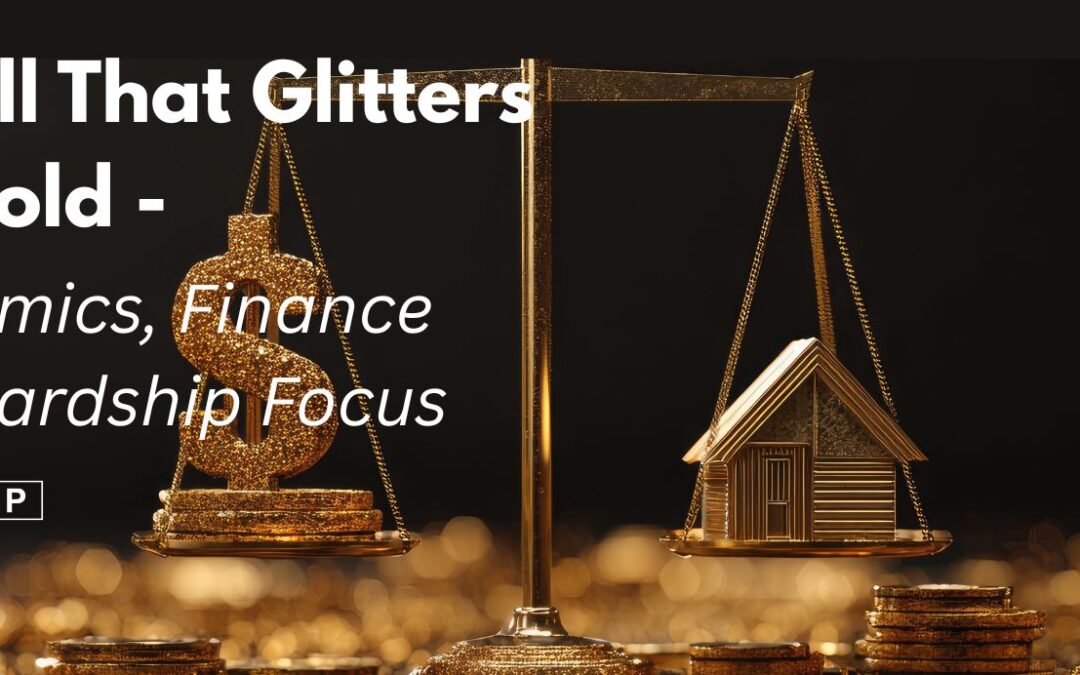

When All That Glitters is Not Gold:
An Economics, Finance, and Stewardship Focus
February 26, 2026
Host: Hon. Sam Rohrer
Guest: David McAlvany
Note: This transcript is taken from a Stand in the Gap Today program aired on 2/26/26. To listen to the podcast, click HERE.
Disclaimer: While reasonable efforts have been made to provide an accurate transcription, the following is a representation of a mechanical transcription and as such, may not be a word for word transcript. Please listen to the audio version for any questions concerning the following dialogue.
Sam Rohrer:
Hello and welcome to this Thursday edition of Stand In the Gap today. And today it’s a special focus on economics, finance, and stewardship. Whether it’s regular daily news or frankly even the recent very visible comments by our Attorney General Pam Bondi before Congress, where she was being asked questions about why the administration was stonewalling to release the Epstein files. She responded by lecturing a congressman who asked the question and said, “Why do you keep asking about that issue when we all ought to be talking about all the economic success?” And then she pointed directly to, “Don’t you know that Dow Jones has crossed 50,000?” That was one example. Or the president in Tuesday’s State of the Union address where multiple references were connecting various economic statistics that he quoted and presented as undeniable proofs of success. The prime messaging of our day continues to revolve around money, investments, finances, tariffs, taxes, interest rates, and other money related themes mentioned in the state of the union dress.
And also he went beyond because some of those things get involved in things called bribery and fraud and corruption and insider trading, all which was mentioned on Tuesday night. While things related to money though are important, they are important to every person. The pursuit and the love of money we are told in scripture becomes a problem. That’s a root of all evil. Scripture tells us with riches actually growing wings and flying away. Yet in scripture, it does talk about comprehensively, about money and wealth. And it does so in terms of those stewardship and that wealth comes from God. And the question is not how much we have, but far more about how we have chosen to glorify God through what he has provided or given to us. In its end of this balance that today’s program will focus. Now, the title I’ve chosen to frame our conversation today between my special first time guest here to stand on the gap today, David McAlvany is this.
When all that glitters is not gold. All right. Now, just a bit about my guest, and we’ll get to know him just a little bit in this first segment, but David’s been CEO of the McAlvany Financial Group since 2008. The firm was founded by his family. 1972, focuses on precious metals and helping families manage wealth responsibly. He’s a graduate of Biola University and an associate member of Keeble College in Oxford. Now, David is also the author of The Intentional Legacy. It’s a book that he wrote about how faith, character, and thoughtful preparations shape both financial decisions and generational impact. All right. And with that, David, welcome to the program. It’s really great to have you on.
David McAlvany:
Such an honor. Thanks for having me on today.
Sam Rohrer:
David, let’s take the balance of this first segment, get to know you just a little bit. I think it was in the 90s when I first met your father, Don. It was some event. It’s when I was serving in public office and I forget what the circumstances were, but I met him at one point. In 2008, you took over the firm. So let me just ask you this. In short, what is the mission now? The mission statement of McAlvany Financial Group, and I’ll give the website in a minute here. And how does it differ, say from other wealth management firms?
David McAlvany:
Yeah, I think we start with education as being a foundational objective. We want people to be able to make wise decisions with the resources that they steward. And so within that framework of stewardship versus ownership, we want people to understand what is happening in the world and what the right actions are to take at a particular point in time. So beyond sort of standard financial planning, there are very specific things within the economy, within the financial markets, which are constantly changing, which can either help or harm the ultimate financial objectives of an individual. And we feel like education and preparing people to see the world in as much detail as they can handle is a prerequisite to them making wise decisions as they allocate from their wealth, whether it’s time, talent, or financial resources.
Sam Rohrer:
Okay. And that actually sets up or leads right into the next question I was going to ask you because we deal on this program and we focus on biblical worldview. It’s the fact, and we make it very clear, there are two worldviews. There is a biblical worldview and then there is all else. And it makes a tremendous difference how one approaches everything from wealth to family, to society, to political policies, all those kinds of things. So from that perspective, just an inside view from your perspective, would you share your personal world of view, your personal view of money, wealth, finances, and kind of put some of that together?
David McAlvany:
I think it’s very well encapsulated by a quote from Larry Burkett many years ago who said, “All that God has given you in life is not just for you. ” When you take the perspective that the gifts and talents that he’s given you, perhaps the financial resources that he’s entrusted to your care are not just for you where there is an embedded other centeredness, that I think comes for us from a biblical worldview, where we see that we live in a world and we’re intended to be a blessing to other people, whether that is family or within our community, there is a broader mandate of impact. And this is something that is sort of beyond looking yourself in the mirror every day and saying, “It’s all about me. ” It absolutely is not. All that God has given you in life is not just for you.
So I think with that as a starting point, we have infused into the way that we approach the financial markets, the notion that this stewardship mandate is really to be a blessing to other people.
Sam Rohrer:
Okay. And with that, we’ve got about a minute left in this segment. Most people focus on the what, what you do. Now it may be what you give, how much you give away to someone as an example or how much you may … Or however that may be, but the scripture really bears down a lot onto the motivation of the why. How do you balance the why and the what?
David McAlvany:
Yeah. I mean, I come back to the gifts that were given at the temple and wealthy would come in and give these lavish gifts and yet Jesus focused in on the widow’s mites and how the heart was certainly the more important piece. It wasn’t a quantitative piece. There was a qualitative piece and the gratitude and the generosity of which those simple widows mites were given, that really is what Jesus was looking to. The why, it is an expression of gratitude. It is an expression of understanding from whom these gifts come. And when we think of that stewardship versus ownership, it really is this notion that it’s not yours. You’ve been allowed for a time to, in your generation to manage resources. And again, we certainly expand that from financial resources to the time and talent, specifically the gifts that God’s given you. How are you stewarding this?
How are you continuing to grow intellectually, spiritually, emotionally, and in terms of the financial stewardship mandate? All
Sam Rohrer:
Right, David, let me just jump off here. David McAlvany is my guest today. The theme is this, when all that glitters is not gold. This is an economics, finance, and stewardship focus today. Glad that he’s with me. He’s got a website at maculvaney.com, and I’ll give some more preciseness on that as we come back to begin talking about US economic health. Well, if you’re perhaps just tuning in today, this is Stand in the Gap. And my special guest today is first time guest with us, David McAlvany. He is the CEO of the McAlvany Financial Group, and that tells you a lot where you’ll see what they’re involved in as we walk through economic focus here today. But they have a website that anybody who would be interested in looking at that, it’s mcalvany.com. It’s M-C-A-L-V-A-N-Y, McAlvany.com. And then go back/stand in the gap. So if you go maculvaney.com/stand in the gap, there’s something there, which I haven’t seen yet myself, but they put together for anyone listening to this program can find out more information.
Now, the theme today is this, because we believe here that the Bible speaks to all issues of life. That is why on this program, if you listen routinely, you’re going to hear everything and you do hear everything from geopolitical to military strategic to economic as we’re dealing today to various aspects of health and medicine and across the spectrum, constitutional items, all that kind of things. And that’s because we live in a world where the word of God does speak to all that we do. And our emphasis and hope is that we can apply biblical principles to things that are around us, often confusing things, but should not remain confusing to the believer. Now, when measuring or analyzing nationwide economic data, which we often hear reported, it includes employment numbers as an example, or layoffs or unemployment applications to personnel to corporate and national debt, whatever it is, it’s very broad.
These types of information are routinely massaged. And selectively, my experience has been selectively reported in order to paint a picture oftentimes, very oftentimes more glowing than it actually is. And the bottom line is that economic data is nearly always deceptively reported. It’s delayed sometimes if it helps the narrative, sometimes it’s sped up, and that’s why they often come back many times and revise significantly earlier numbers. All right, you get the idea. But that’s sadly the nature of modern politics and the human heart, I’m going to say, which is built on establishing and nurturing carefully selected narratives. Reports, as I mentioned, they’re delayed. Measurements are redefined, expectation and are directed to certain segments of the population that are important for the administration that happens to be in power at that point. But the result is that at any given point in time, it’s nearly impossible to really know or trust what is officially released without some additional input.
So I say that upfront. So David, you are in the business of wealth management and you manage a vast sum of funds, but you have been addressing and having to keep abreast of a wide amount of information because you have to sort it through and all of that compare and all of that. So here’s my question to you. And to that degree, in a micro sense, focusing here now more on America first, and then we’ll go a little bit more globally in the next segment, how would you grade the true economic health of America today here in 2026? And let me do it by this, on a scale of one to 10, where one is collapsed, which we’re clearly not a one, to 10 being never been better, where would you say we are and why?
David McAlvany:
I’d say we’re at a solid six. And there is certainly an administration who is active in trying to run the economy as hot as possible, and there’s means of doing that. They want cheap rates, they want interest rates lower, they want there to be lots of liquidity within the financial markets, and so they’re doing all that they can to get that done. You can see some of the influence at the Federal Reserve to bring rates lower, and again, that is so that they can run the economy hot. It definitely interested in reshoring, rebuilding the manufacturing base here in the United States. A part of this comes out of DOD papers where we are too dependent on foreign nations for critical minerals for a whole host of things. That is a long process. That is a very long process to reestablish. It takes five, 10 years, I would suggest, Sam, to get that done.
In the immediate, the reason I’d rate it a six is because we have pressure in the jobs market, contrary to what was discussed in the state of the union here recently, where 70,000 construction jobs were heralded. We finished last year with the slowest job growth figures since 2003. 2024, we added 1.46 million jobs. 2025, we just revised those lower. The full year, 181,000 jobs. So from almost a million and a half to under 200,000 jobs for the full year, 2025, really not impressive. So out of the gates, we added 130,000 jobs, and yet when you look at the birth death modeling, when you look at the seasonal adjustments, even the 130,000 isn’t something that I put a whole lot of stock in. So strong number from a headline perspective, it beat expectations, but I think you look at the revisions for 2025, and actually we’ve got some weakness emerging within the jobs numbers, again, slowest growth since 2003, 181 versus 1.46 million for 2024.
Really what that speaks to, Sam, is a K-shaped economy where you’ve got folks at the upper end who are doing quite well, and the bottom 90% are just barely hanging on.
Sam Rohrer:
Okay. Now David, you make a statement like that, and people may have heard this case shaped a comment. Let me just follow up real quickly on that. When you talk about those at the top, you used a little bit of 90%, so 10% at the top, 90% at the bottom. Okay, let’s just look at those groups. The 90%, how do you evaluate them by income? And when you say they’re struggling, can you define, what’s that mean, struggling?
David McAlvany:
Yeah, the top 10% would be between 200, $250,000 in income or higher, and anything below fits the bottom leg of that case shape. So what we see today, Sam, is that you have a lot of kind of wealth effect, put that in quotes, where if folks have a balance sheet, they have assets that are appreciating, they feel free to spend. And 68% of our economy is based on consumption, and over half of that consumption expenditure is coming from the top 10%. So if you see anything that happens that sort of hits the financial markets, now all of a sudden you’ve got a negative feedback loop into the economy where because there’s so much of a concentration in spending coming from the top end, those who are earning the most and have assets that are appreciating, if their assets don’t appreciate, they get conservative, they tighten the belt and all of a sudden you move very quickly in the direction of a recession because the majority of Americans are living paycheck to paycheck.
Sam Rohrer:
Okay. Okay. Let me ask you a quick question here and follow up because I mentioned an introduction. Pam Bondi said, “Hey, look, what are you asking questions about Epstein as an example?” That was the example for Congress. She said with the Dow over 50,000 and then the president mentioned that, here’s a real question, is a Dow at 50 or a Dow at 40 or a Dow at 45? Is that the measurement of financial success or what does that actually tell you?
David McAlvany:
What it tells us is where we’re at in a cycle. We have the Dow Jones industrial average, which moves from extreme low levels to extreme high levels and figuring out where you’re at in that cycle of either undervaluation or overvaluation is very critical. To quote a number like the Dow being over 50,000 and say, “This is the measure of our success.” I’d say, “No, no, no. It’s actually not. It’s a measure of liquidity in the system and it’s a measure of speculation in the system.” Right now we’ve got the S&P, another broad measure of equities trading, and this is according to the Buffet ratio where you take total GDP and compare it to the stock market capitalization, 212%, never been higher, Sam. So we’ve got peak levels in equities, which is really an expression of the speculative trend in the marketplace. If you measure it according to the cyclically adjusted price earnings ratio, we’re at 40.3.
It’s only been higher once in US history, and so you could say, well, that’s a great success story. I would argue that you are on the edge of quote unquote mean reversion. In other words, these things cycle to extremes on the upside and extremes on the downside. Your best days are already behind you. You do not sustain high levels of overvaluation for very long. This is not a trigger, if you will. You don’t get to the high level and then all of a sudden say, “Okay, well this is triggering a collapse in the equity market.” No, but it tells you that your future rates of return with a price earnings ratio of 40, your future rates of return are at best one to 2% per year for the next decade, because you’re buying things that are at unjustifiably high levels. So I think it’s naive to suggest that Dow 50,000 is somehow an indication of economic success.
What it isn’t an expression of is speculation. We’ve had this AI narrative, which is supposed to be completely revolutionary that has driven a tremendous amount of capital, not only US-based capital, but foreign capital coming in to invest in US stocks on the basis that this is the next sort of internet revolution. It is the next, just like we had in the year 2000, 99, 2000, something that was going to be transformative. And indeed it was, but prices got ahead of the economic reality. Now we’ve got the CEO of Anthropic suggesting that 50% of white collar jobs will be impacted by AI negatively. What does that do, Sam, to the economy? We’ve got the stock market saying, “This is a great place and a great time to speculate.” Meanwhile, the implication is actually quite negative in terms of AI’s impact to white collar jobs.
Sam Rohrer:
Okay, David, with that, we’re going to jump ahead. Ladies and gentlemen, thanks for being with us right now. When all that glitters is not gold, we’re looking at economic and numbers and how to diagnose what we hear and interpret what it really is. My special guest, David McAlvany with McAlvany Financial Group is my guest. David with us when we come back, we’re going to talk about debt, both US and global. All right, we’re at the bottom of the hour right now. And again, I’d like just welcome to the program as we introduce a new expert guest here today, David McAlvany. He’s the CEO of the McAlvany Financial Group. They have a website at mcelvaney.com. And if you add to that back/stand in the gap, just like today, not stand in the gap today, but stand in the gap, then there will be something there evidently.
I haven’t seen it yet myself, but to greet you when you go there. So, all right, let’s go ahead here, David. Let’s open our discussion now in regard to the implications of debt, of which everybody’s hearing about debt. And frankly, the levels of debt, national, global, and individual are sky high. Now, we know that the Bible clearly says in places like Deuteronomy eight, Deuteronomy 28 and elsewhere, that national and personal wealth, and you alluded to this in the first segment, wealth enriches comes from God. Now, that’s a concept a lot of people say, “Well, I make my money.” I’ve done all this, I’ve done that, but God says, “Wait a minute, I make that possible.” So when it comes to nations, God told Israel as the pattern for all subsequent nations, and by extension, obviously us here and today, and any nation, frankly, that claims that they are one nation under God.
Israel did that, and our nation says it, President even quoted this on Tuesday night, but God makes it clear that if they fear God and keep his commandments, that’s God’s requirements, but he says, “If you do, then he will cause their wealth to increase.” And as a sign of true blessing, Deuteronomy 20 is very clear about that, they will become a lender nation. They will have funds to which they will be able to lend to other nations, and he refers to it as they become the head, not the tail. But if they walk away from God in pride and arrogance and throw gratitude out the window and refuse to be guided by obedience to God’s commands, God said he would turn that nation from a lender nation into a borrower nation where they are dominated and crushed by debt and where they would become not the head, but the tail.
And God says there’s no exceptions. He doesn’t cut a break for anybody. So few in government today though, I know from being there for so many years, they just simply don’t believe God in regard to this statement, or frankly, anything that God says should be the pattern for leadership or national duty or purpose. And our nation and leaders, David, I think are a prime example that in pride they think they can beat God’s warnings, that worldly wisdom will somehow prevail over Godly wisdom. All right, now that’s where I’m lay down that premise. Now, from a macro or global perspective, our entire world is in debt. I want you to comment on it. A debt has increased deadly, but how serious is our national and global debt? People have been talking about it for a long time. We just can’t keep spending. We just can’t keep spending and the debt goes up and goes up and yet somehow things continue.
Therefore, it says, “Oh, come on, you’re crying wolf.” But the Bible says the borrower’s a servant of the lender. So in other words, how long can we go spending and borrowing with our spending and debt accumulation rising at a faster rate, frankly now under the current administration right now. I just did a study on this this morning, actually faster rate wise right now than under all former administrations. All right, so let’s speak about debt and the impact.
David McAlvany:
Yeah. I think debt is really just living beyond your means and drawing tomorrow’s consumption forward into the present day. And so that is a problem. We’ve been allowed to do that as interest rates have come down, thinking here in the United States, but globally interest rates have contracted too in the same timeframe. We had the Fed funds rate at 20% in 1980 and it steadily moved to basically zero by about 2020, 2022 when we put in a generational low at the end of a long term interest rate cycle. Interest rate cycle, Sam, usually spread themselves out over 20, 30, 40 years. So we have to assume that if history is anything of a guide, that we have an interest rate trend which is gradually creeping higher in the years ahead, not lower. We’ve been able to live beyond our means and borrow because we’ve been able to refinance at lower and lower interest costs over the last 40 years, but that’s in the rear view.
Looking forward and 200 years of interest rate history, the typical cycle is about 36 years. We stretched to 40 in this last cycle. And again, I think we’ve got probably 20, 25 years of steadily rising interest rates. So that puts this mountain of debt really in question. Can we continue to service something at higher and higher interest levels? Globally, it’s $348 trillion. Over 105 trillion in government debt, corporate debt of around 100 and the remainder for households, well over 235% debt to GDP if you’re looking on a global basis. And again, it’s been accommodated because rates have come down over the last 40 years and people have grown very accustomed to being able to take on more and more debt without the interest payments overwhelming them. Well, it was only a few years ago that rates put in the lows here in the US interest as a percentage of tax revenue was under 6%.
Sam, now it’s over 23%. So we already see the unsustainability just in a small bump in rates because we are sitting on $38.7 trillion. By the end of the year, we’ll be at $40.6 trillion. The congressional budget office has just given us the freshest numbers and they assume 1.9 trillion added to our debt figures this year. So we will be, if you’re looking at gross debt, we’ll be looking at 127, 130% debt to GDP here in the United States. Is it sustainable? No. What are we paying? Again, you’ve got, let’s call it five and a half trillion, $5.6 trillion in revenue coming in. This is tax revenue. One to 1.25 of that. We’re over 20% now going just to make minimum payments. That’s not to pay principle, that’s just to feed the meter. That is not good.
Sam Rohrer:
No, it’s not good. And in reality, we’ve depended on borrowing from other nations. We’ve talked about in other programs, and in fact, it causes the value of our dollar to go down. We ship our inflation overseas. And in reality, we can’t afford with interest rates already about a trillion dollars at the current level, at the rate of increase, we physically can’t support the interest payments. So there seems to be a convergence of things coming together, unlike, I’m going to say, in years past, it’s almost like we’ve used up every opportunity that was left. Now there’s discussion about, well, people are saying, “Well, we need to revalue the price of gold as an example, because we got to link this dollar to something. Japan, China have been borrowing. They’re dumping their dollars, so it’s creating an issue. The BRICS nations we’ve talked about are coming up with their own currency.” So anyways, a transition appears to be in place.
What do you think this transition’s going to look like since we can’t keep going on forever like we are?
David McAlvany:
Yeah. I mean, this week we’ve got a Financial Times article, which is titled The Haven Asset Status of US Treasuries is eroding. And it talks about this myth that the US Treasury market is a safe place to be. And they go further to say that the global sovereign debt market cannot be trusted. The reason is because you have a debt issue and you have countries that have not taken a course of action to shift at all. We’re continuing to just kick the can further down the road and not doing anything real from a fiscal perspective to either increase revenue or decrease expenses. And so this debt is becoming a real issue. It’s going to show up in devaluations of currencies and an increase in interest rates, which is just accommodating greater risk being taken by investors who are funding or loaning to these sovereign entities.
So I think where we need to pay attention, gold has been sending a very clear signal over the last three or four years that the system is broken and has to be remade. And first it was central banks, then it was very well informed, family offices and wealthy individuals taking positions in gold. And I think to the degree that the stock market continues to maintain these high levels, you’ve got the vast majority of Americans who are happy to say all is well, supporting Pam Bondi’s conclusion that, “Hey, everything must be fine.” And yet the brightest in the room and the brightest around the world are saying, “This is a broken system, and as it comes unglued, you better have a better haven asset.” And that’s why we’ve already seen a migration to gold. That’s why we’ve already seen the price move from 1,500 to 2,500 to 3,500 to 5,500.
I mean, it’s sending a very important signal that our currency system and our debt system is broken.
Sam Rohrer:
Okay. And with that, we have about a minute left here. When governments begin to move towards identifying gold, which is what the BRICS nations are doing and attention here, anybody watching know the price of gold and silver going up, they’ve dismissed it by saying, “Well, that doesn’t really mean anything. It’s just that’s where people go when their trust perhaps in the government money goes down.” But what kind of real value exists with tangible gold and silver as an example?
David McAlvany:
Well, I think, but you can’t dismiss and in the same sentence say that this institutional risk can be ignored. That is the problem. The reason why people are moving to gold is because there is faith in institutions which is eroding and this is governments, this is colleges, this is … I mean, if you look across sort of the governing class, there is less confidence today in the governing class, not only in the United States, but globally. And again, you can Can’t say price of gold, it doesn’t really mean anything. No, it means everything. It’s the most important market signal that you have in a world where you don’t have a clean read on the value of anything else because we have fiat currencies, which are being inflated away.
Sam Rohrer:
David, let’s just pick this up in the next segment just a little bit here if we can. We’re out of time here. But ladies and gentlemen, think about that. I asked that question to David the way intentionally to see what he would come back with because trust in whatever you have is critical. And that comes down to how we’re going to conclude for the believer, where must our trust be? How do we evaluate that? And is trust an insignificant factor? I’m going to say, no, it’s not. All right. If we go into our final segment here, again, if you didn’t catch us all the way from the beginning, my special guest is David McElvaney. It’s the first time that he’s been with us. And I would encourage you all to go to the website and check it out if you have any interest. It’s mcalvany.com and then back/stand in the gap.
And David, I just actually went there myself and looked at it. That’s very nice. But I want you to do that because this whole area of economics, finance, wealth, wealth management, it’s one of those things that for many, many people, it’s confusing. Let’s put it that way. And in the days when numbers are given, like we’ve been talking that are half true, part true, some cases not at all true, it becomes ever more important that there’s a place to go in various areas like this that one can trust. One other thing, maculvaney.com/stand in the gap, and that’s all one word, just stand in the gap. No spaces in there. All right, David, let’s balance now as we kind of conclude this. There’s so much more we can do, and then Lord willing, in future programs, we’ll be able to go into greater detail on the various issues upon which we’ve just touched today, of which there are so many.
We could speak hours and hours on the matter of debt, national debt, corporate debt, personal debt. How do you manage it? All of that kind of thing as an example, let alone how one views gold and silver in these days when the value of the US dollar continues to plummet, primarily because inflation is there when we’re printing more than we have and it devalues what we have. Civilizations in the past have gone through the very same things. If they ever knew God’s pattern, they threw it out the window, which we have too. And so with that, there are consequences and any God-fearing person should not be caught by surprise in regard to those things they see around it. So that being the case, let’s balance now the world’s focus, I’m going to say, on money as linking money as we’ve talked about to an evidence of success and then God’s perspective of money because they’re not the same.
For all believers, how they steward what they have is a biblical obligation. Scripture speaks about that and we can spend a long time on that too. But we’re also told to be more concerned about laying up treasure in heaven than on earth. We’re also told to be careful how we steward what we have because you said very clearly it does not belong to us. Even if we think we made it on our own, we didn’t. We made it by the grace of God. So with these things and more in mind, provide some, I’m going to say wise counsel for how a God fearing person should think and live in these uncertain times where it seems like wealth is flying out the window to inflation, becoming more uncertain, and how do they manage and understand their financial duties to God and to their families in the midst of all of this?
David McAlvany:
I think we can start with a basic balance sheet analysis. On the one hand, you’ve got assets, on the other hand, you have liabilities. And in scripture, we’re very clearly told borrower becomes servant to the lender. And so that question of who are you servant to, I think is very important. And to what degree are you a servant or a slave to a credit system? In an optimal world, we would reduce debt. We would eliminate it altogether from our balance sheet. So I think a very practical measure, a very practical step is to look at where you’re at and how you can deliberately chip away at the debt that you have on your balance sheet. I think another thing that’s very critical is to what degree do you have reserves? Because there are life events which draw down on your reserves. And we know this in a relationship.
A husband and wife … Life together as frail and fallen human beings is not always pretty, even though it’s often beautiful and we must have enough emotional reserves to be able to weather the challenges that we find in relationship. It’s no different in the financial markets. What kind of reserves do you have? And I think this is where you look at a cash position or even a superior version of cash. If you look at the long history of gold and silver, all you’re talking about is a more stable expression of currency. That is the history. Only since 1971 have we treated gold and silver as a commodity. It’s 5,000 year history is as a currency which cannot be debauched by the managers of currency. It’s God’s money. So to me, reserves, having an adequate reserve and being willing to put those reserves to work opportunistically are very critical.This is like buying straw hats in winter.
You are able to put your money to work very effectively. Use those reserves opportunistically if you understand the markets. So this brings us to this issue of understanding the times. If we are to understand the times and know what to do, I think this talks to an educational imperative about understanding market cycles and where you’re at in them. In fact, I read the Parable of the Talents as an expression of some who did not understand the times and buried their talents, and some who did understand the times, because I understand how you make money, and there is no way to make 100% return, a thousand percent return, 5,000% return by wild speculation. That is not God’s way. But when you can buy a dollar’s asset for 10 cents and see it return to fair value at a dollar, you have bought it right and you have made money on the basis of your purchase price, and it was because you understood the market dynamics and knew when to take your reserves and put them to work.
I ultimately see the real value of gold and silver in a portfolio, whether it’s in a retirement account or physically held as an expression of reserving so that it can be more effectively put to use in the land, plant, infrastructure, the best run companies in the world, in farmland. And there’s so many sort of next steps after you’ve positioned in gold. And I think that’s really important. It’s not an end and of itself. It is a means by which you navigate difficult times and more effectively put money to work opportunistically.
Sam Rohrer:
All right. So you’ve laid down some fundamental principles which are not something new to our audience about, for instance, debt and not being come servant to the lender. That’s not a new phrase for our listeners to hear. We don’t have much time left here, but in these days, when the media and all of that is geared to making people anxious and to making them nervous and confused, speak to that issue because it doesn’t involve just how we approach our finances, but it’s really all of life too.
David McAlvany:
Well, I mean, you have to recognize that mainstream media is there to draw attention to itself. And the way that it does that is by sensationalizing so many things. And so it’s not as if they are delivering high quality data. They are there to entertain and to sell advertising and to do so, they remain in a mode of sensationalism 99% of the time. We’ve been doing our podcast 18 years every week, and we try to put 10 pounds of mud into a five pound sack every week so that people have real data, real information, and can sift through and discern where they should be and what they should be doing, how they can navigate particularly the financial side. But we often talk about politics and international relations and all the things that are ultimately impactful to our lives, as well as our finances. And so I think education is one of those things that brings peace and calm.
When you don’t have education, you are left to depend on others and you’re sort of operating in a blind fashion. I don’t think that is a representation of good stewardship. It’s not just an asset allocation, which is a part of stewardship. It’s also education, which is an imperative. And I think that comes first in the process of stewarding any of the resources God’s given
Sam Rohrer:
Us. There you go. David McElvaney, thank you so much for being with us. Ladies and gentlemen, again, David McAlvany. He’s the CEO of the McAlvany Financial Group. They have a website that you can go to get some information, maculvaney.com. And David, thanks for being with us today. Good information. I look forward to having you back where we’ll go into further detail on a number of things that we just hit from almost a 10,000 foot level, but same time, important biblical priorities. Ladies and gentlemen, thank you for being with us today, and Lord willing, we’ll be back here tomorrow, and I hope that you’ll plan on joining us then as well.

Recent Comments